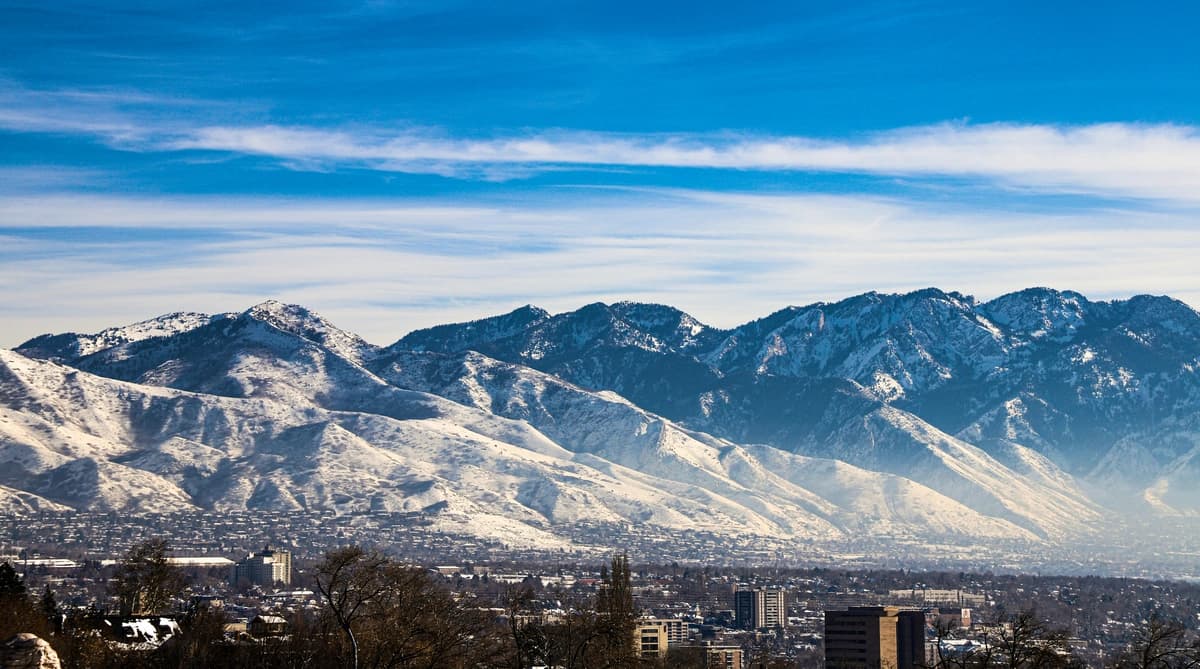
Freediving in Salt Lake City
Salt Lake City is best known for year-round pool and thermal spring freediving paired with seasonal open water training in regional lakes and reservoirs., making it a strong choice for beginners and certification progression.
Max Depth
Water Temp
Visibility
Water Type
Schools
Why train here
Why freedivers choose Salt Lake City
Salt Lake City combines year-round indoor pool training at Dive Utah with a network of regional open water sites across Utah. Blue Lake's thermal springs in the West Desert support open water freediving up to 20 m in any season, while lakes and reservoirs such as Bear Lake, Sand Hollow, and Mountain Point open up depths from 12 to 40 m seasonally. The setup makes it a rare inland base where freedivers can progress from breath-hold fundamentals to deeper open water training without leaving the state.
Salt Lake City has 2 listed schools operating locally. With consistently excellent visibility, water temperatures from 10°C to 28°C, and a year-round season, the local training profile is clear.
Ideal for
Who Salt Lake City is best for
A quick view of who this destination works for at different stages.
Beginners
Controlled indoor pool conditions at Dive Utah are ideal for learning breath-hold fundamentals, static apnea, and dynamic apnea without open water variables, and Blue Lake thermal springs offer a calm, warm open water progression step available year-round.
Progression
Full PADI and SSI certification progression is supported locally: pool work at Dive Utah and The Scuba Dive for confined water, Blue Lake thermal springs for year-round open water up to 20 m, and regional lakes and reservoirs for deeper seasonal training up to 40 m.
Advanced focus
Open water depth is not a limiting factor. Blue Lake thermal springs support year-round training to 20 m, and regional lakes and reservoirs give access to 30–40 m during the open season, enough to cover Advanced and Master Freediver depth requirements without leaving the state.
Why this destination
What makes Salt Lake City special
These are the traits that shape how training feels once you are in the water.
Signature draw
year-round pool and thermal spring freediving paired with seasonal open water training in regional lakes and reservoirs.
Training upside
Year-round pool and thermal spring training
Local advantage
Full PADI and SSI certification progression
What to know
deepest open water (up to 40 m) is seasonal
Training environment
Training conditions in Salt Lake City
Pool training runs at Dive Utah in Holladay (indoor, 13 ft / 4 m) and The Scuba Dive in Riverton. Open water sessions are distributed across several regional sites: Blue Lake thermal springs in the West Desert for year-round open water up to 20 m, plus Mountain Point Lake (Bluffdale), Bear Lake (Garden City), Sand Hollow Reservoir (Hurricane), and additional reservoirs around the SLC valley used seasonally for depths between 12 and 40 m.
The destination's combination of controlled pool sessions and beginner-friendly coaching with mostly shore-based access to the training site is the practical constraint on water time and day-to-day repeatability. The main tradeoffs are deepest open water (up to 40 m) is seasonal and training spread across multiple sites rather than a single dedicated base.
Seasonality
Best time to freedive in Salt Lake City
Salt Lake City is generally workable year-round. The main planning variable is less about a single peak season and more about matching conditions to your training goals.
Expect water temperatures between 10°C and 28°C with consistently excellent visibility.
Beginner guide
Is Salt Lake City good for beginner freedivers?
Controlled indoor pool conditions at Dive Utah are ideal for learning breath-hold fundamentals, static apnea, and dynamic apnea without open water variables, and Blue Lake thermal springs offer a calm, warm open water progression step available year-round.
The listed school inventory adds course options for beginners, with local operators handling safety and day structure.
Practical info
Getting there
Nearest Airport
Salt Lake City International (SLC)
Transfer Time
25 minutes by car
Visa Note
ESTA or US visa required
Best Months
Year-round
Map
Map view for Salt Lake City, USA.
Map data © OpenStreetMap contributors. Ocean overlay © Esri, GEBCO, NOAA, Garmin, and contributors. Open full map
Schools
Freediving schools in Salt Lake City
Salt Lake City currently lists 2 schools with certification, language, facilities, and pricing details.

Nearby alternatives
Nearby alternatives to Salt Lake City
These alternatives stay close to the same geography, water setup, or training style.
Got questions?
Questions about freediving in Salt Lake City
Everything you need to know about freediving, training, and choosing the right destination.
01 Is Salt Lake City good for beginner freedivers?
Controlled indoor pool conditions at Dive Utah are ideal for learning breath-hold fundamentals, static apnea, and dynamic apnea without open water variables, and Blue Lake thermal springs offer a calm, warm open water progression step available year-round.
02 What is the best time to freedive in Salt Lake City?
Salt Lake City is generally workable year-round, so the best timing depends more on your course goals, conditions, and travel plan.
03 How deep is Salt Lake City for freediving?
Salt Lake City offers access up to roughly 40m, which is enough to support both course work and more committed training depending on the local setup.
04 How do you get to Salt Lake City?
Most visitors fly into Salt Lake City International (SLC) and then transfer 25 minutes by car to reach Salt Lake City.
05 Are there freediving schools in Salt Lake City?
Yes. There are 2 listed schools in Salt Lake City.
06 How much does a freediving course cost in Salt Lake City?
Beginner freediving courses in Salt Lake City typically range from $250 to $500 depending on the school, certification agency, and course duration. Compare schools and pricing on the destination page.