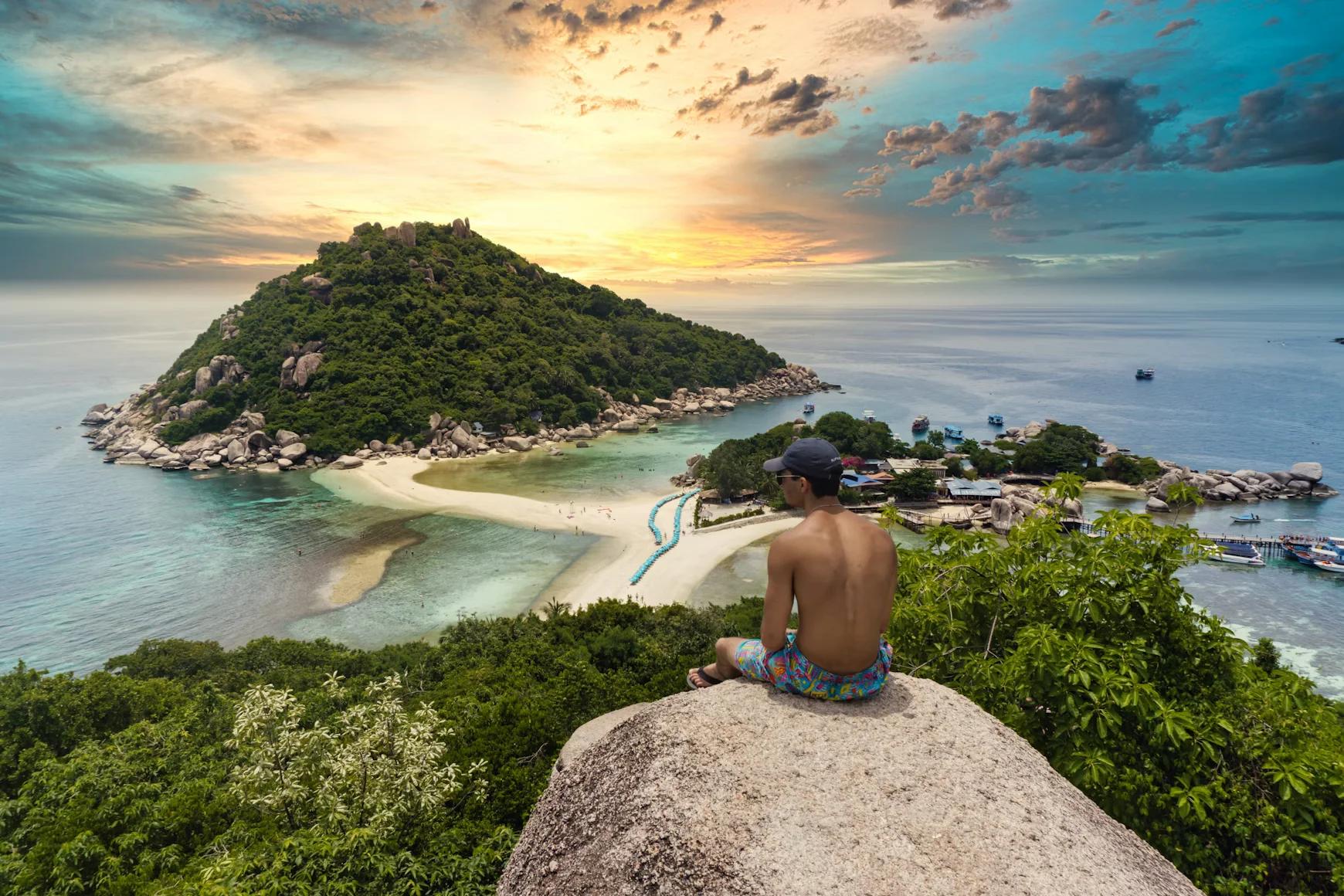
Freediving in Thailand
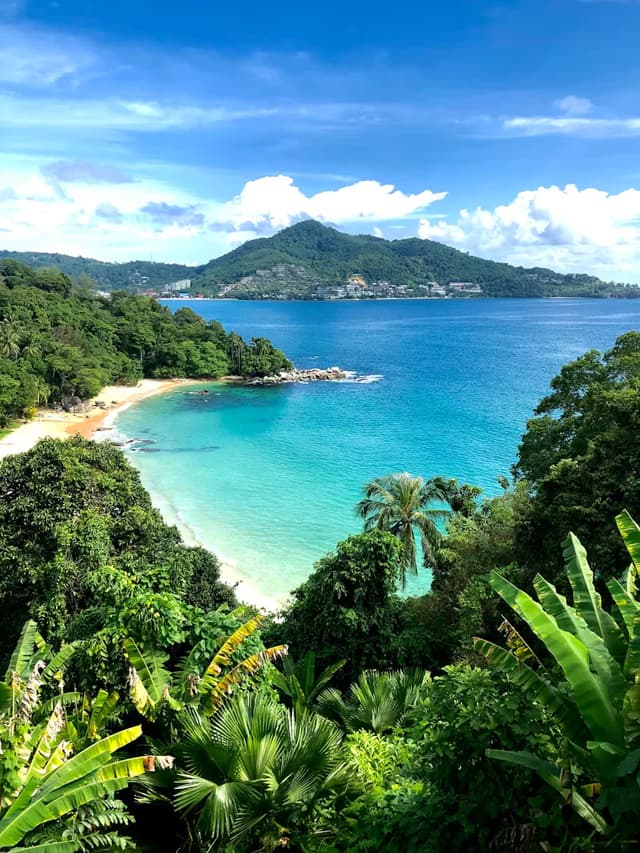
Thailand fits well for beginners taking their first freediving course, with warm-water conditions, easy island access, and a strong concentration of schools around Koh Tao that also supports continued progression after certification.
Thailand is structured around island and coastal training hubs, with Koh Tao acting as the main freediving base where courses and daily diving naturally overlap. Rather than focusing on individual dive sites, training is organized around a few consistent setups that support progression.
Warm tropical water allows frequent in-water sessions across multiple days, with conditions that are generally stable enough to maintain continuous training blocks. Depth access is typically managed through structured sites and boat-based progression, especially around Koh Tao, where repeated dives and frequent courses make it easier to build depth gradually rather than through isolated jumps.
Entry usually goes through Bangkok before continuing to islands or coastal regions such as Koh Tao or Phuket. Once on site, movement is simple and localized, with training becoming the central structure of the stay.
Costs remain relatively accessible compared to many global freediving destinations, which makes longer training periods more realistic for progression-focused divers.
What defines Thailand is less a single standout site than a system: repeatable conditions, dense course availability, and a training environment designed for continuous progression over time.
At a glance
- Destinations listed
- 5
- Schools across the country
- 13
- Water temperature range
- 26°C – 31°C
- Peak months
- January, February, March, April, May, June, July, August, September, October, November, December across destinations
Comparison
How the main destinations compare
Compare beginner fit, local school density, and how each destination in Thailand balances courses versus training-led trips.
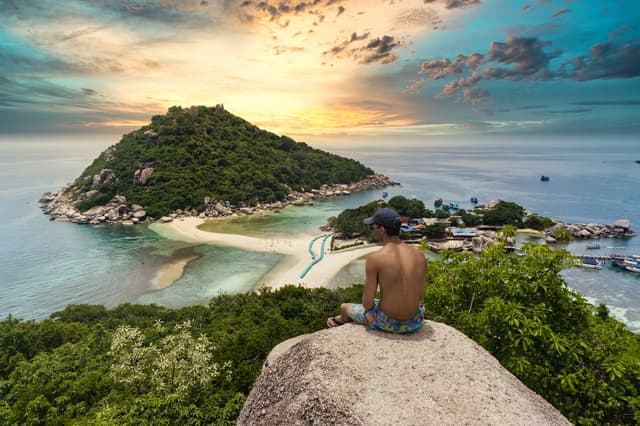
Koh Tao
40m max depth, 6 listed schools, and beginner-friendly coaching, an established freediving scene, and warm water with a mix of shore and boat-based sessions.
Phuket
40m max depth, 5 listed schools, and boat-based access, warm water, and beginner-friendly coaching with boat-based access to the main training sites.
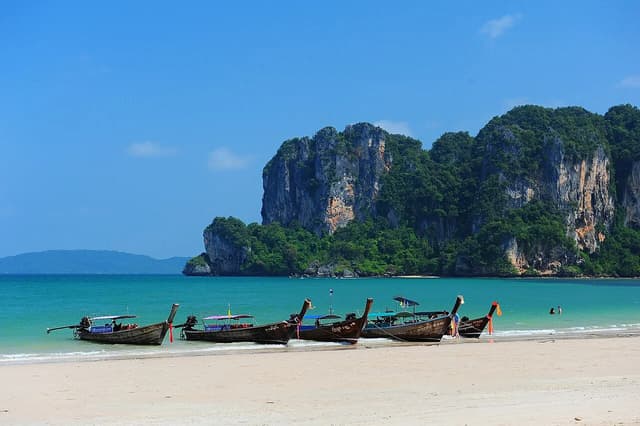
Krabi
40m max depth, 2 listed schools, and beginner-friendly coaching, warm water, and boat-based access with boat-based access to the main training sites.
Ideal for
Who Thailand is best for
A fast read on where Thailand fits so you can qualify the overall trip before getting lost in town-level details.
Beginners
Thailand has destination options that are usable for a first course, especially when you want a country where warm water, travel convenience, and coaching choice can all line up.
Intermediate divers
This is where Thailand is often strongest: enough destination variety to compare access style, school density, and travel rhythm without leaving the same national context.
Advanced training
Thailand is better framed as a mixed recreational and course destination than as a pure elite depth base.
Conditions
Conditions and seasonality
Thailand does not follow a single freediving season, but it does have a clear monsoon-driven split, which affects exposure, sea state, and training consistency depending on region.
In the Gulf of Thailand (Koh Tao, Koh Phangan, Koh Samui), conditions are generally more usable during the northeast monsoon (roughly December–March), when seas are calmer and training is more consistent with higher chances of repeatable sessions. During the southwest monsoon (roughly May–October), conditions can still be diveable but are more irregular, with more wind exposure and occasional reduced visibility or rougher surface days that require flexible site selection.
In the Andaman Sea (Phuket, Koh Lanta, surrounding areas), the pattern is reversed. The dry season (roughly November–April) tends to offer the most stable freediving conditions, with better visibility and more predictable sea state. The rainy / southwest monsoon period (roughly May–October) brings stronger swell exposure, more frequent weather disruption, and a shift toward protected sites or reduced consistency depending on conditions.
Water temperature stays stable year-round, typically around 26°C–31°C, so thermal comfort is not a limiting factor even in longer training blocks. The real constraint is not temperature, but wind, swell, and visibility shifts tied to monsoon cycles.
In practice, Thailand is a year-round freediving destination, but training quality is highly seasonal at the regional level. The key decision is not whether to go, but which coast aligns with the monsoon period of your trip.
Training options
Schools and courses in Thailand
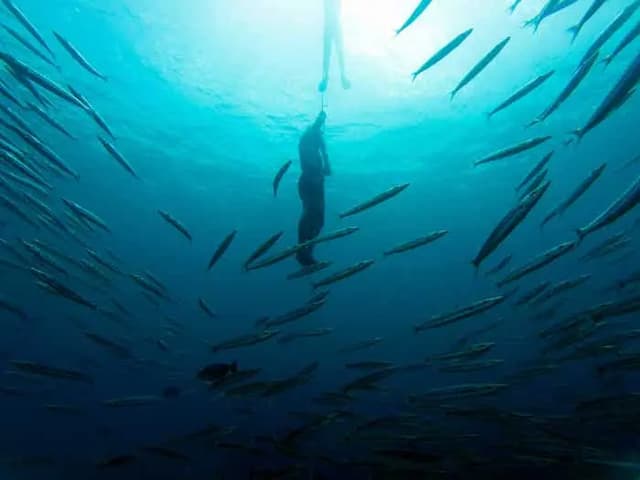
Thailand is useful for both planning a trip and comparing freediving schools, but the real signal is not geography — it is how training is actually delivered in the water. Most freediving operators use the same certifications (SSI, AIDA, Molchanovs), so differences come from structure, repetition, and group density.
Schools are mainly concentrated in Koh Tao, Phuket, and Krabi. Koh Tao is the main progression hub, with dense course flow and frequent repetition on similar depth lines. Phuket is more spread out, often mixed with broader dive operations, which makes training more variable. Krabi has fewer schools and a lighter, less continuous training presence.
When comparing destinations, the key is not the number of schools, but:
* how often you repeat the same depth setups * how beginner-friendly and structured the progression feels * whether the place fits a first course, a progression phase, or a more flexible training block
In practice, Thailand works as a comparison system: each area offers a different training rhythm, and the value of a school is mostly defined by how consistently it can build repetition in real freediving conditions.
School shortlist
Schools worth opening next
These school pages are the fastest next step once the country-level comparison starts narrowing toward a real destination shortlist.




Practical info
Travel and logistics
🛬 Entry points
Main international entry is usually Bangkok (BKK / DMK), with direct routing into regional hubs depending on your freediving destination. For southern routes, Phuket (HKT) and Krabi (KBV) are the most direct coastal entry points, while Koh Samui (USM) is the most efficient gateway into the Gulf islands. In the far south, Hat Yai (HDY) is sometimes used as a connection point toward ferry networks.
🚤 Transfers and ferry networks
Most freediving destinations require a multi-step transfer (flight → land → ferry). The Gulf of Thailand system is the most structured:
- Lomprayah: main fast-ferry operator connecting Surat Thani / Chumphon / Koh Samui → Koh Phangan → Koh Tao - Seatran Discovery: alternative ferry network on similar Gulf routes
Koh Tao always requires a ferry connection, regardless of entry point. Travel time varies significantly depending on route combination, so alignment between flight arrival and ferry departure is critical.
Andaman routes (Phuket / Krabi) rely more on land transfers to piers, followed by shorter island ferries. Scheduling is flexible but more sensitive to daily sea conditions.
🏡 Accommodation
Accommodation is widely available across all budgets. In Koh Tao, most freedivers stay in areas such as Sairee or Chalok, where proximity to schools and dive centers reduces daily friction. Booking is usually flexible outside peak season, but limited during high-demand training periods.
In Phuket and Krabi, accommodation is more distributed, with options ranging from coastal resorts to inland budget stays depending on training base and transport access.
💰 Costs (typical ranges)
- Domestic flight: ~40–120 USD - Flight + ferry combo to islands: ~60–150 USD
- Fast ferry segments: ~15–50 USD
- Costs depend heavily on timing and how early the ferry-leg is booked in relation to flights.
⚠️ Practical constraints and tips
- Multi-leg transfers are the main source of delay, not flights themselves - Morning arrivals reduce risk of missing same-day ferries - Fast ferries are efficient but more sensitive to sea conditions (motion can be significant) - A buffer day before any freediving course is strongly recommended - Scooter transport is standard on islands, but road conditions can be slippery during rain periods - Most logistical issues come from misaligned ferry schedules rather than infrastructure limits
🧭 Safety and reliability
Thailand is generally stable for travel. Operational risks are mostly logistical: missed connections, weather-related ferry delays, and tight scheduling between flights and boats. Planning margin matters more than complexity.
Visa 🛂
Most travelers enter under visa exemption or e-visa schemes depending on nationality. Entry is generally straightforward for short freediving stays.
Learn
Learn before freediving in Thailand
Guides connected to Thailand's listed destinations, plus practical training and planning context.
What Is Freediving? A Clear Beginner Introduction
Understand what freediving is, how courses work, and where beginners usually start training.
How To Hold Your Breath Longer for Freediving
Build longer breath-holds by improving relaxation, technique, and training consistency instead of forcing it.
Freediving Training: What To Practice On Land, In the Pool, and In Open Water
Break freediving training into technique, conditioning, equalization, and rescue skills so progress stays measurable.
Got questions?
Questions about freediving in Thailand
Everything you need to know about freediving, training, and choosing the right destination.
01 What is the best time to freedive in Thailand?
That depends on destination, but the main windows in the current inventory cover January–December across destinations. Use the destination pages to narrow the exact season.
02 What is the best freediving destination in Thailand for beginners?
Koh Tao is one of the first places to compare because it combines destination recognition with the strongest current school or depth signal in the country.
03 Which areas in Thailand are best known for freediving?
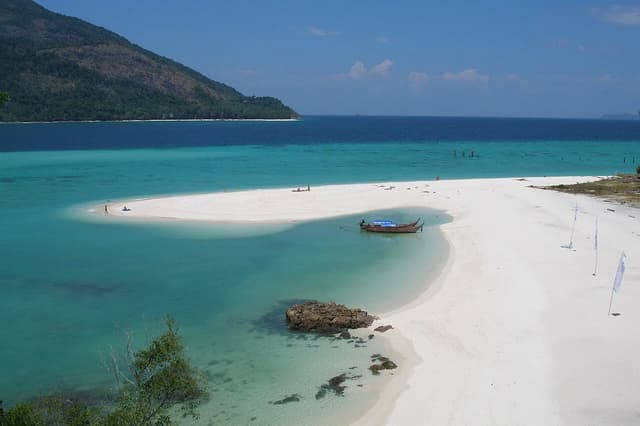
Koh Lipe, Koh Tao, Krabi, and Phuket are the main destinations currently surfaced in the country guide.
04 Is Thailand good for freediving courses?
Yes. Thailand has 13 listed schools across 5 destinations, so it supports both first-course research and more deliberate destination comparison.