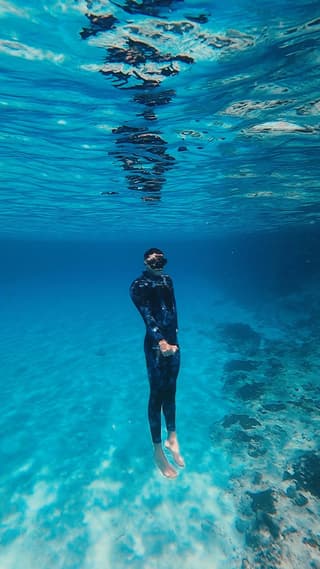
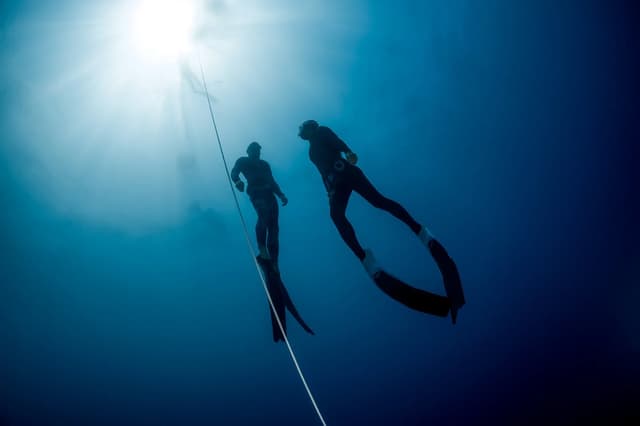
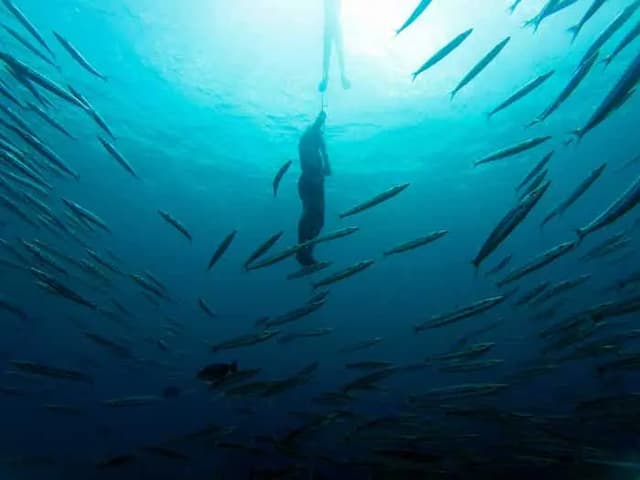
Effective freediving training is layered. Dry work improves relaxation and breath control, pool work improves technique and economy, and open water connects those skills to depth, equalization, and real rescue procedures. If you skip one layer, progress usually gets noisy. That is why certification pathways matter: they package those layers in the right order instead of leaving you to guess what comes next.
Effective freediving training is layered. Dry work improves relaxation and breath control, pool work improves technique and economy, and open water connects those skills to depth, equalization, and real rescue procedures.
If you skip one layer, progress usually gets noisy. That is why certification pathways matter: they package those layers in the right order instead of leaving you to guess what comes next.
Dry training builds the base
Dry training usually includes breathing drills, mobility, mild apnea walks, and carefully controlled tables. The point is not to simulate a hard open-water session. The point is to improve tolerance, awareness, and body position without adding the complexity of depth.
This kind of work is easiest to do consistently at home, but it works best when a school gives you a progression to follow. Otherwise most people either under-train or jump too quickly to maximal breath-holds.
Pool sessions improve efficiency
In the pool you can refine streamlining, turns, finning rhythm, and relaxation under movement. Strong pool technique carries over to depth because it reduces wasted effort.
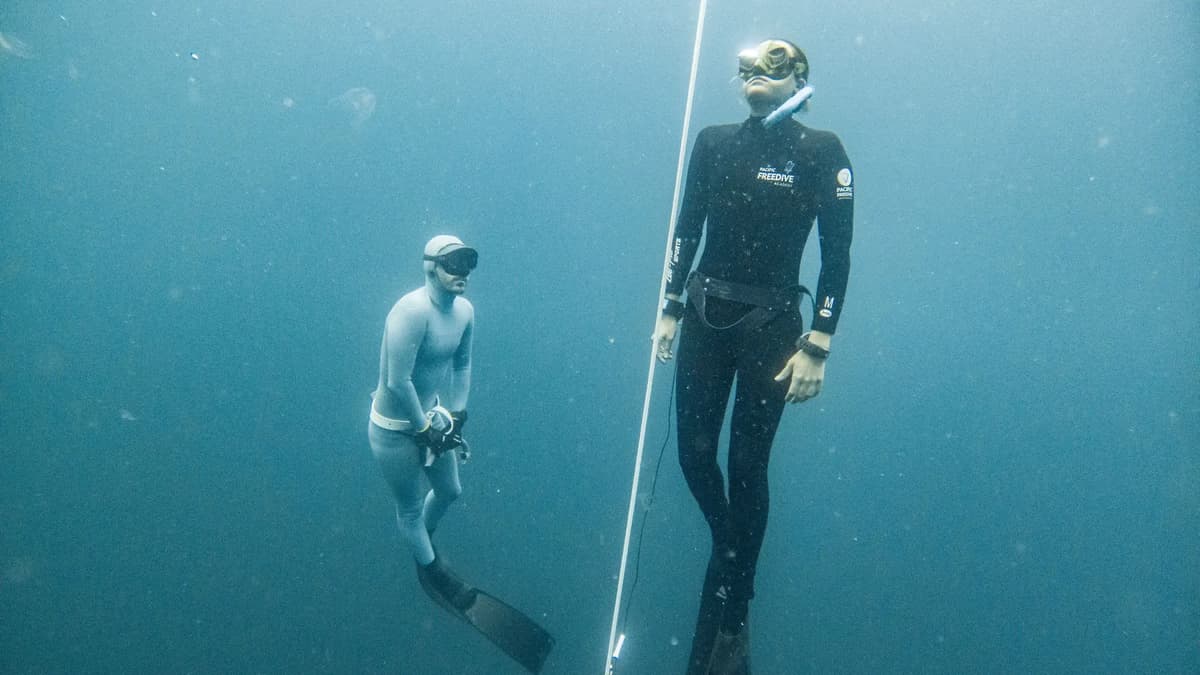
Open water training is where the system has to hold up
Depth adds equalization demands, line protocol, and different forms of stress. That is why open-water sessions should still feel structured: clear warm-ups, clear turn-depth plans, and clear safety roles.
Common questions
How often should you train freediving each week?
Most recreational freedivers do best with a few focused sessions each week rather than daily maximal efforts.
Do you need pool training for depth freediving?
Pool work is not mandatory, but it is one of the best ways to improve efficiency and confidence before adding depth.
Why is certification useful for training progress?
Certification creates a clear progression for technique, safety, and depth so you are not improvising the whole plan yourself.