Competitive freediving has two major governing bodies: CMAS (World Underwater Federation) and AIDA (International Association for the Development of Apnea). Both sanction world championships, ratify world records, and set competition rules, but they operate independently with different rulebooks and different priorities. CMAS is IOC-recognized and WADA-compliant, positioning freediving on a path toward the Olympic Games. AIDA is freediving-specific with deeper grassroots roots in the sport. Most elite athletes compete under both federations.
Competitive freediving has two major governing bodies: CMAS (World Underwater Federation) and AIDA (International Association for the Development of Apnea). Both sanction world championships, ratify world records, and set competition rules, but they operate independently with different rulebooks and different priorities.
CMAS is IOC-recognized and WADA-compliant, positioning freediving on a path toward the Olympic Games. AIDA is freediving-specific with deeper grassroots roots in the sport. Most elite athletes compete under both federations.
Different organizations, different origins
CMAS was founded in 1959 by Jacques-Yves Cousteau and governs all underwater sports, from freediving to finswimming to spearfishing. It operates through national federations and is recognized by the International Olympic Committee.
AIDA was founded in 1992 specifically for freediving. It is solely focused on the sport and has built a strong competition culture over three decades. AIDA is not IOC-recognized and is not a WADA signatory, though it maintains its own anti-doping policies.
Competition rules differ
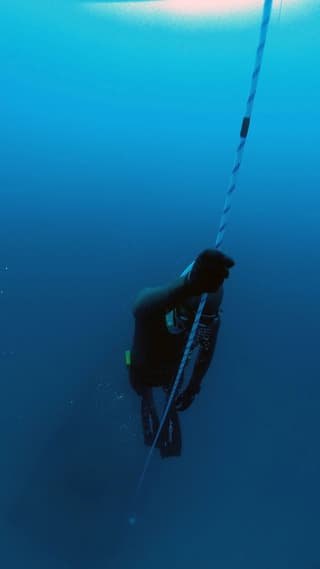
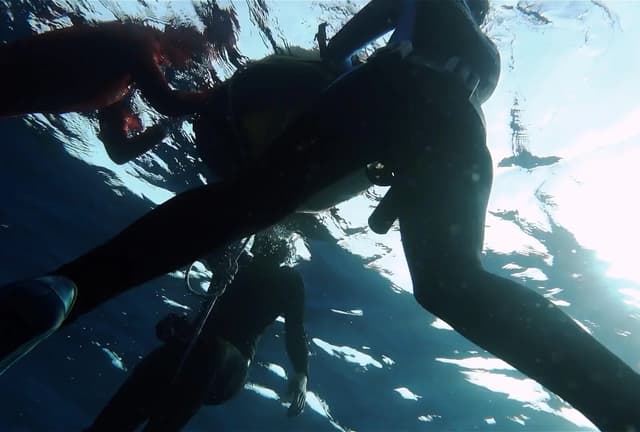
The most visible difference is the surface protocol after a depth dive. AIDA requires athletes to remove facial equipment, give an OK sign, and say "I am OK" within 15 seconds. CMAS gives 20 seconds and requires an OK sign directed at the judge. Under AIDA rules, coaches can provide verbal cues during the dive but not during the surface protocol. Under CMAS rules, no coaching is allowed at all.
Both use the same card system: white card (clean dive), yellow card (penalty), and red card (disqualification for blackout, loss of motor control, or protocol failure). Penalty details differ between the two rulebooks. CMAS also separates pool records by 25m vs 50m pool and depth records by freshwater vs sea.
Separate world records
CMAS and AIDA maintain completely separate world record registries. An athlete can hold records under both federations. Alexey Molchanov, Alenka Artnik, and Alessia Zecchini all hold records ratified by both organizations.
CMAS requires WADA-compliant doping control for record ratification. Since 2025, all CMAS athletes must hold an Anti-Doping eLearning Certificate. AIDA does not have equivalent requirements, which has been a point of debate in the freediving community.
Major competitions
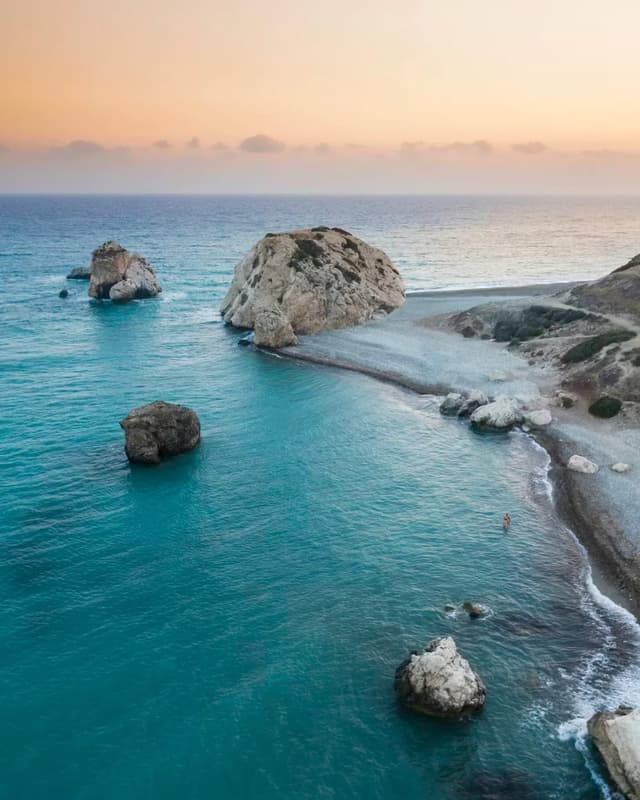
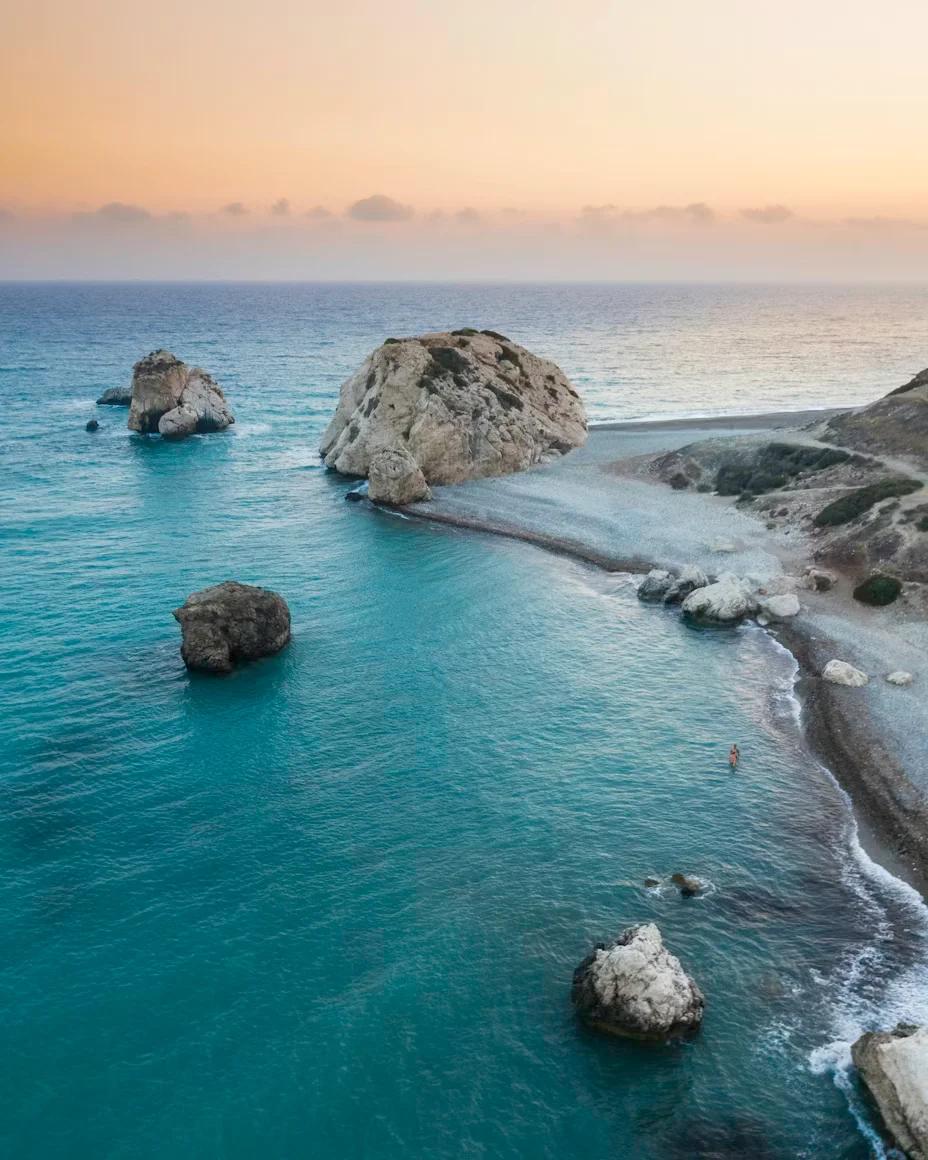
AIDA runs annual World Championships, most recently in Limassol, Cyprus (2025). CMAS runs separate World Championships for pool and depth disciplines.
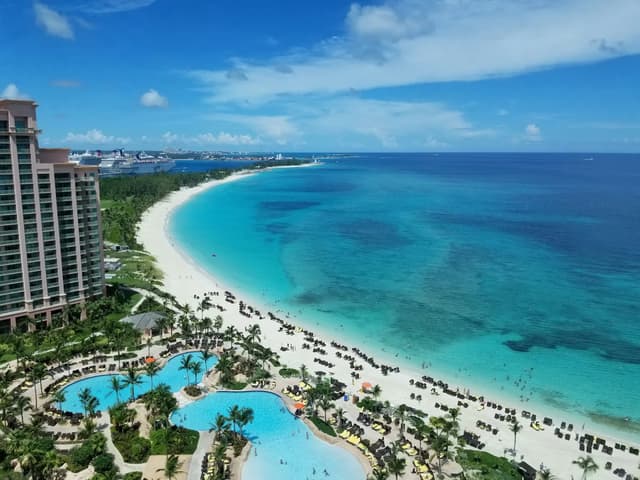
Vertical Blue at Dean's Blue Hole in the Bahamas, founded by William Trubridge, is widely considered the most prestigious freediving invitational. It switched from AIDA to CMAS rules in 2021. Freediving debuted at The World Games in 2025 under CMAS rules, a significant step toward Olympic recognition.
Why it matters for the sport
The split between CMAS and AIDA means the sport lacks unified governance. This is the single biggest barrier to Olympic inclusion. CMAS has IOC recognition and WADA compliance, which gives it the institutional framework the Olympics require. AIDA has cultural credibility and a loyal grassroots following.
For most recreational freedivers and competitors, the divide is more political than practical. Athletes compete under both federations, and the training is the same regardless of which organization sanctions the event. What matters is the quality of the competition and the depth of the field.
Common questions
Do athletes have to choose between CMAS and AIDA?
No. Most elite freedivers compete under both federations and hold records with both. There is no exclusivity requirement.
Why does freediving have two governing bodies?
CMAS governs all underwater sports and has IOC recognition. AIDA was created specifically for freediving and has deep roots in the competitive community. Neither has absorbed the other.
Which federation has stricter anti-doping rules?
CMAS is WADA-compliant with mandatory drug testing and registered testing pools. AIDA has its own anti-doping policies but is not a WADA signatory.