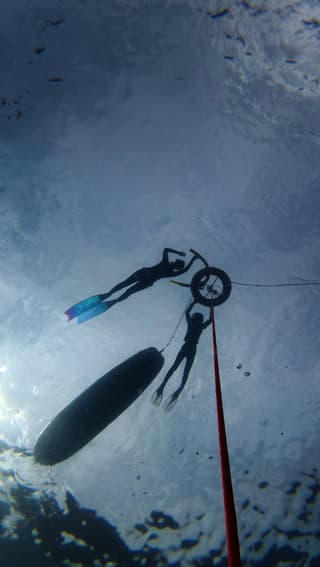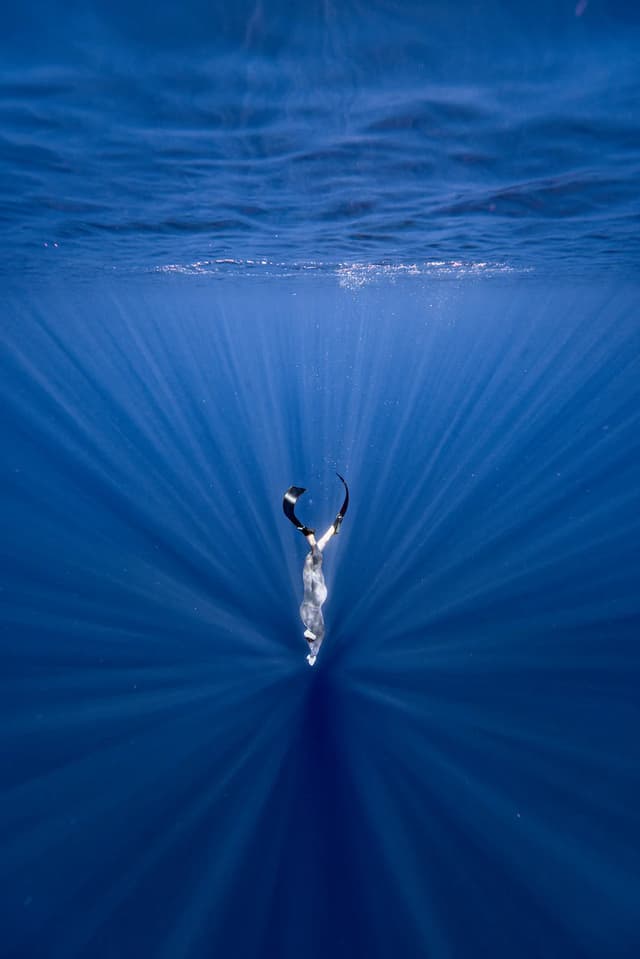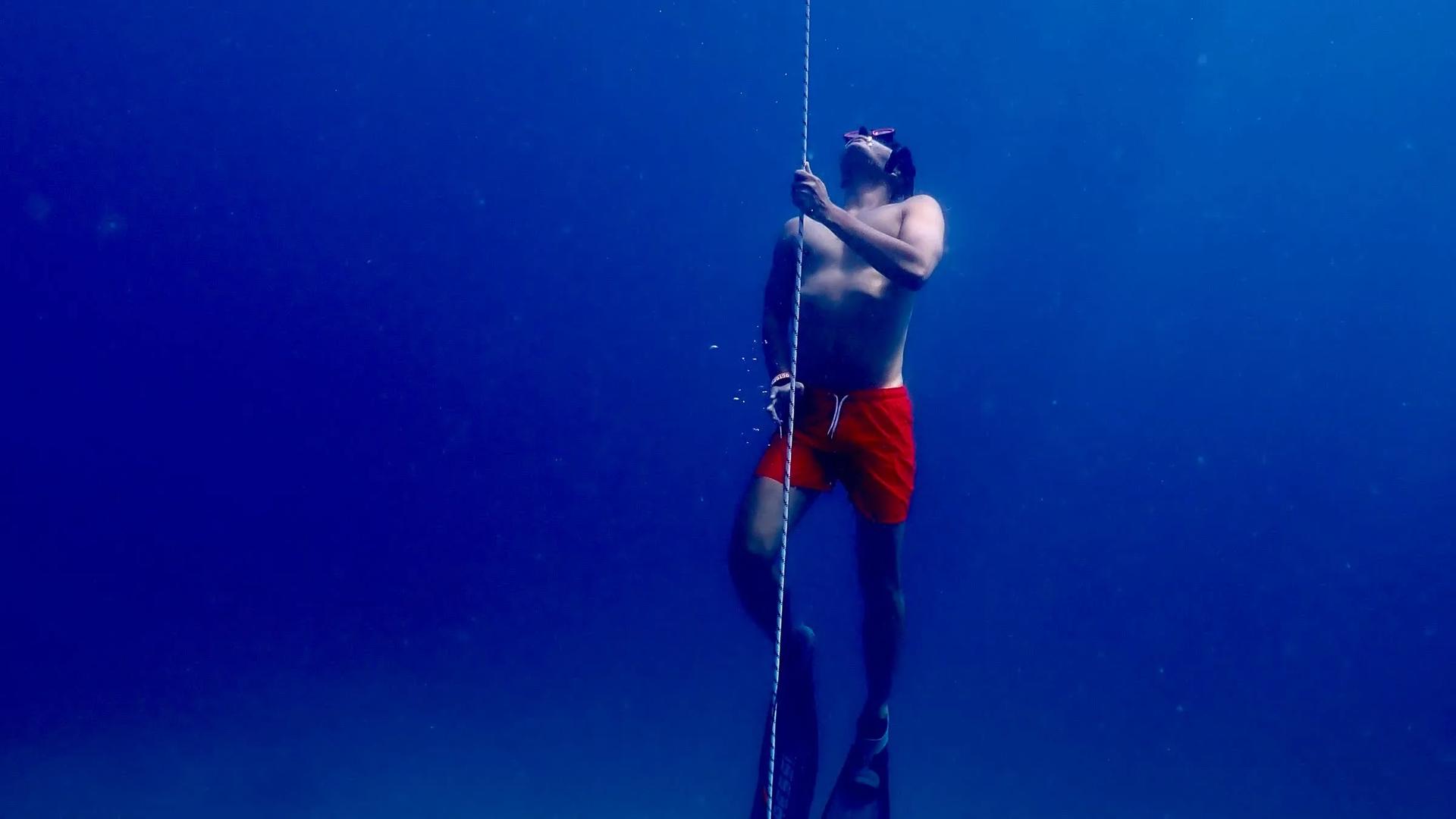
Freediving disciplines separate pool performance from depth performance and separate fin-assisted, no-fin, and line-assisted movement. The discipline code matters because a static apnea time, a dynamic pool distance, and a constant-weight depth dive measure different skills and risks.
Freediving disciplines separate pool performance from depth performance and separate fin-assisted, no-fin, and line-assisted movement. The discipline code matters because a static apnea time, a dynamic pool distance, and a constant-weight depth dive measure different skills and risks.
If you are new to records, start here before reading freediving world records. The record number is only meaningful after you know what the athlete was allowed to use.
The main discipline codes
| Code | Performance | Propulsion |
|---|---|---|
| STA | Time, stationary with airways submerged | No distance travelled |
| DYN | Horizontal distance | Fins; commonly a monofin |
| DYNB / DYNBF | Horizontal distance | Bifins |
| DNF | Horizontal distance | No fins |
| Code | Performance | Propulsion |
|---|---|---|
| CWT | Depth, constant ballast | Fins |
| CWTB / CWT-BF | Depth, constant ballast | Bifins |
| CNF | Depth, constant ballast | No fins |
| FIM | Depth, constant ballast | Pulling on the line, without fins |
Bifin abbreviations differ: AIDA uses DYNB and CWTB, while the CMAS public discipline guide uses DYNBF and CWT-BF. The tables introduce common disciplines; they do not reproduce all event categories or the rules for fin technique, line contact, turns and surface protocols.
Pool disciplines measure time or distance
Static apnea measures breath-hold time while the athlete is stationary at the surface under competition supervision. Dynamic disciplines measure horizontal distance underwater in a pool, with separate categories for fins, bi-fins, and no fins.
If you want to try a pool discipline, use instruction and direct supervision. A record table is not a training plan; see the static apnea guide for the distinction between learning and performance attempts.
Depth disciplines measure vertical performance
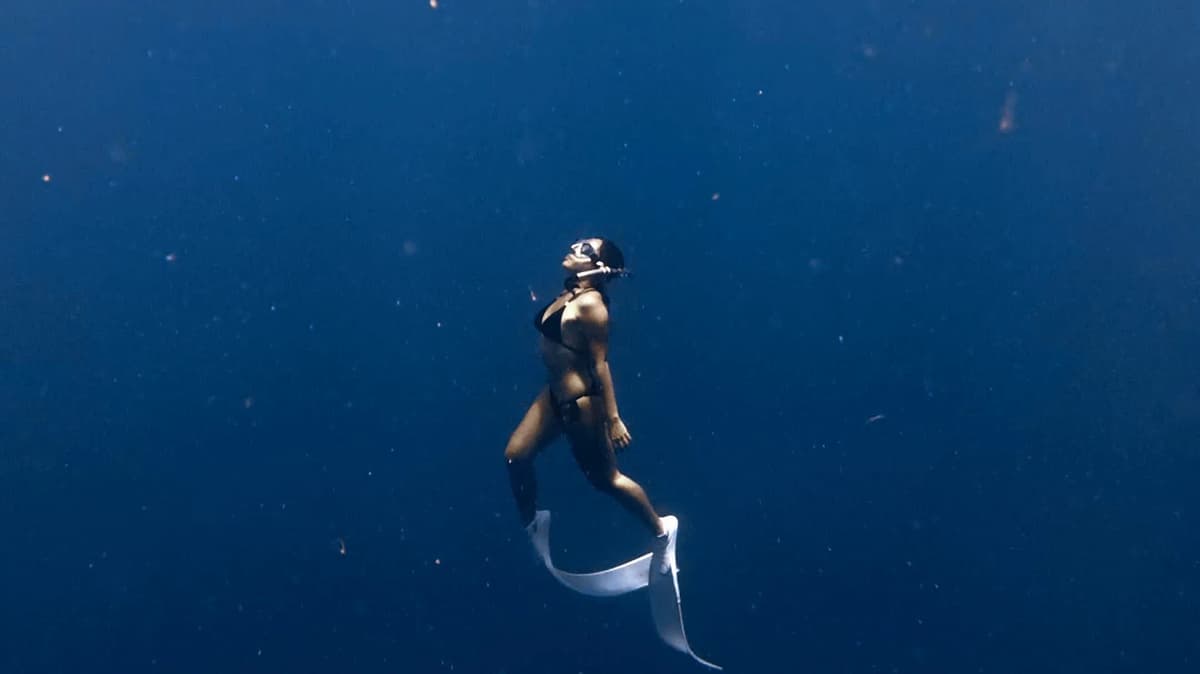
Constant weight depth disciplines require the diver to descend and ascend without changing ballast. Fins, bi-fins, and no-fins categories are split because propulsion changes the effort and technique.
Free immersion allows pulling on the line without fins. Check the event’s discipline and official rules before comparing it with a constant-weight result.
Why the categories should not be compared directly
A long static apnea, a deep CWT dive, and a no-fins depth dive all require breath-hold control, but the limiting factors differ. Equalization, streamlining, turn technique, fin efficiency, pool pacing, and safety team structure all matter in different proportions.
Use disciplines to understand the sport, not to choose reckless personal targets. For most divers, a freediving course is a better next step than imitating any discipline from a scoreboard.
How to read a result
Read the discipline, unit, federation, athlete category and ratification status together. A distance of 100 metres in a pool and a depth of 100 metres describe different performances; the shared number does not make them comparable.
A declared target is different from an accepted result. Use the official result sheet and the rules governing that event. The CMAS index lists current pool and depth documents; some downloads require a login.
Common questions
What are the main freediving disciplines?
The common competitive set includes static apnea, dynamic pool disciplines, constant weight depth disciplines, free immersion, and no-fin variants.
Is constant weight the same as free immersion?
No. Constant weight is self-propelled with fins or no fins depending on the category, while free immersion allows pulling on the line.