Freediving has never been an Olympic sport, but it is closer than most people realize. The sport debuted at The World Games in 2025, produced multiple world records, and CMAS (the IOC-recognized governing body for underwater sports) has publicly stated its commitment to Olympic inclusion. Pool disciplines like dynamic apnea and static apnea can be contested in a standard 50m Olympic pool with no additional infrastructure. Underwater swimming was actually contested at the 1900 Paris Olympics, then dropped because spectators could not see the competitors. A century of camera technology later, that problem is solved.
Freediving has never been an Olympic sport, but it is closer than most people realize. The sport debuted at The World Games in 2025, produced multiple world records, and CMAS (the IOC-recognized governing body for underwater sports) has publicly stated its commitment to Olympic inclusion. Pool disciplines like dynamic apnea and static apnea can be contested in a standard 50m Olympic pool with no additional infrastructure.
Underwater swimming was actually contested at the 1900 Paris Olympics, then dropped because spectators could not see the competitors. A century of camera technology later, that problem is solved.
The World Games 2025: proof of concept
Freediving debuted at The World Games in Chengdu in August 2025. Two pool disciplines were contested: Dynamic with Fins (DYN) and Dynamic No Fins (DNF). The competition produced multiple world records, including Julia Kozerska's 222.5m DNF and Zsofia Torocsik becoming the first woman to swim 300m underwater with a monofin.
The World Games is an IOC-affiliated multi-sport event, and historically it has been a stepping stone to the Olympics. Sport climbing, karate, rugby sevens, and triathlon all appeared at The World Games before joining the Olympic programme.
Pool disciplines fit Olympic venues perfectly
Static Apnea (STA), Dynamic with Fins (DYN), and Dynamic No Fins (DNF) all take place in a pool. No open water, no depth lines, no weather dependence. A standard 50m Olympic swimming pool is all that is needed.
The equipment is minimal: a wetsuit, goggles, noseclip, and optionally a monofin or bi-fins. Compare this to the infrastructure requirements of sailing, equestrian, or cycling. Freediving would be one of the lowest-cost sports to add to an Olympic programme.
The spectator experience has changed
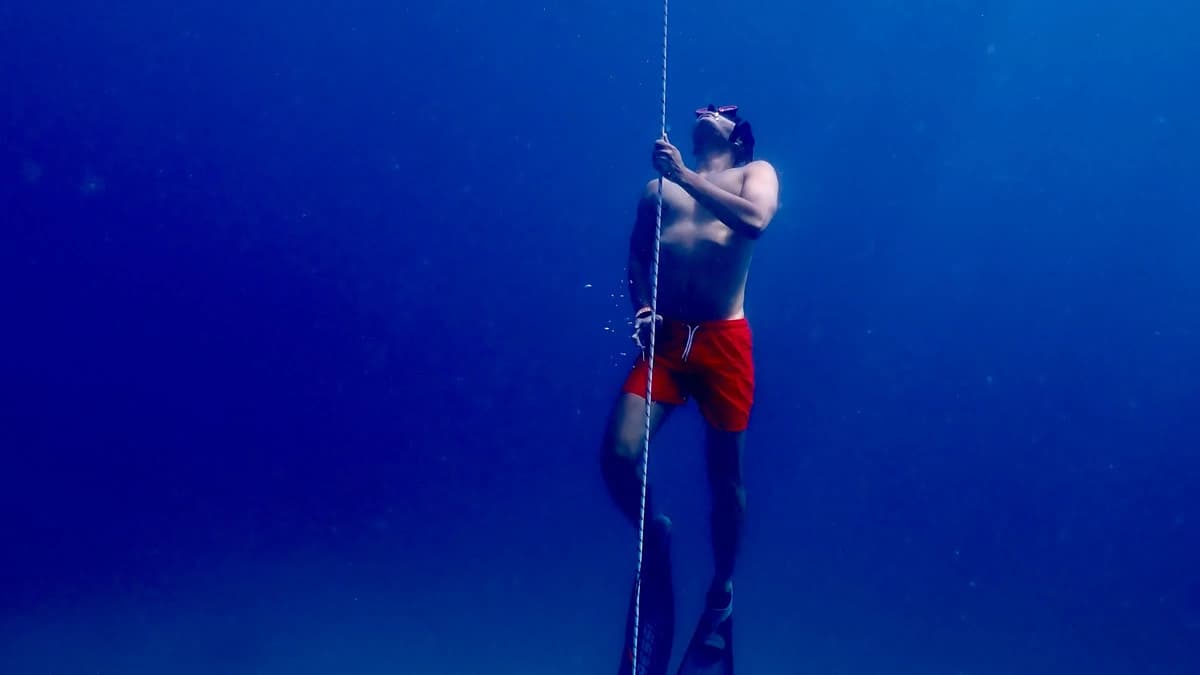
The 1900 Olympics dropped underwater swimming because nobody could see the athletes. Today, underwater cameras, real-time depth tracking, overhead drone shots, and broadcast-quality footage can make freediving highly telegenic.
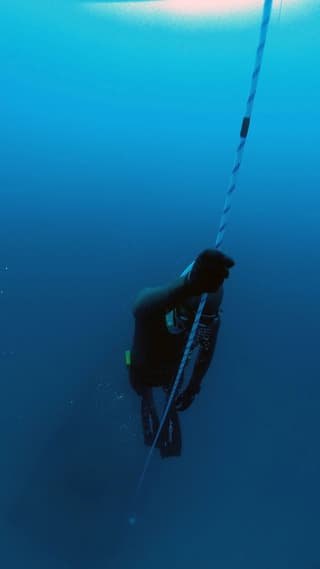
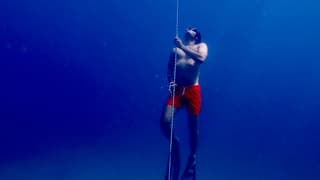
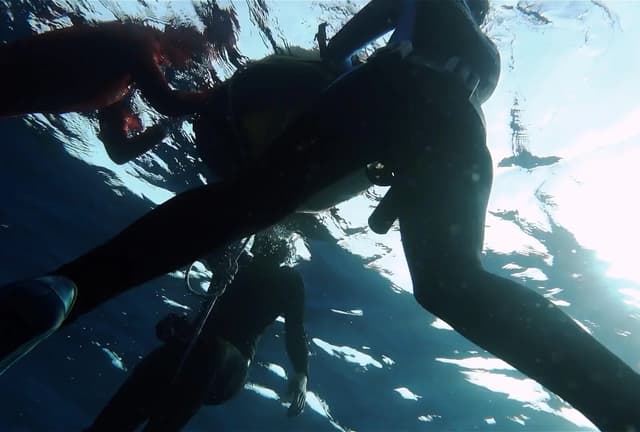
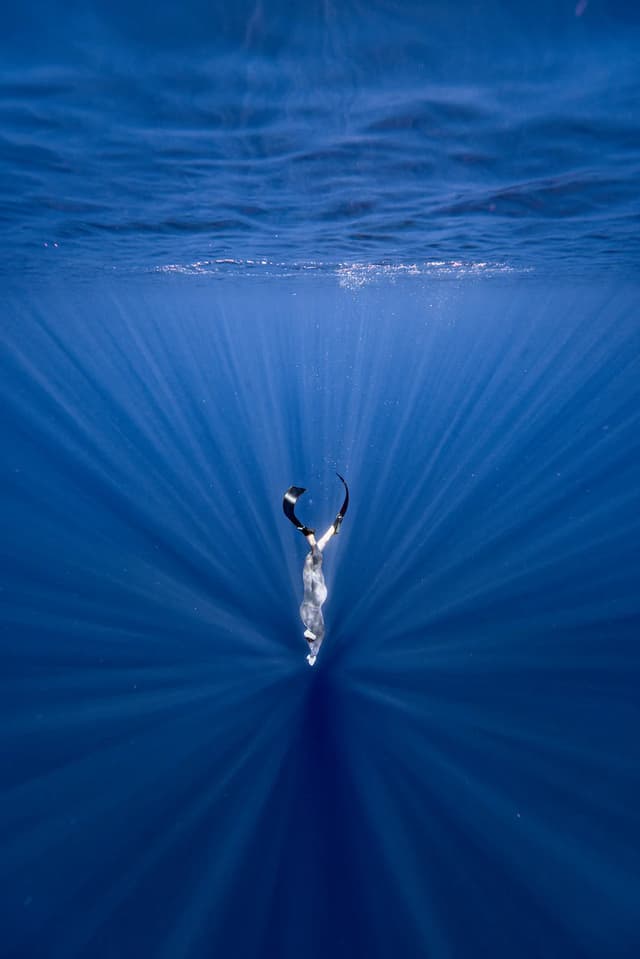
Dynamic apnea is visually compelling: an athlete glides underwater for hundreds of meters while the audience watches both the overhead lane view and the underwater camera feed. Static apnea is pure tension: a clock, an athlete's composure, and the question of when they will surface. It has the same dramatic structure as a weightlifting attempt or a high jump bar.
Athletic merit is not the question
Holding your breath for 11 minutes, or swimming 300 meters underwater on a single breath, or diving to 136 meters and returning under your own power are among the most extraordinary feats in all of sport. The physical and mental demands of freediving rival any Olympic discipline.
The IOC has shown appetite for non-traditional sports with youth appeal. Breaking, skateboarding, sport climbing, and surfing have all been added in recent cycles. Freediving fits this pattern: it is growing globally, has strong social media presence, and appeals to a younger demographic.
What needs to happen first
The biggest barrier is not athletic merit or infrastructure. It is governance. The IOC requires one clear governing body with standardized rules. Currently, CMAS and AIDA operate with different rulebooks and have not unified. Only CMAS has IOC recognition and WADA compliance.
Freediving also needs broad international reach. The IOC retired the old fixed country thresholds; under Olympic Agenda 2020 it now weighs each sport's global participation, youth appeal, and host-city fit case by case. The 2025 World Games debut, growing national federations, and increasing mainstream awareness all point in the right direction.
Common questions
Is freediving in the Olympics?
Not yet. Freediving debuted at the IOC-affiliated World Games in 2025, which is a recognized pathway toward Olympic inclusion. Pool disciplines could use standard Olympic swimming pools.
Which freediving disciplines could be in the Olympics?
Pool disciplines are the most viable: Static Apnea (STA), Dynamic with Fins (DYN), and Dynamic No Fins (DNF). They require only a 50m pool and minimal equipment.
Why is freediving not in the Olympics yet?
The main barrier is fragmented governance between CMAS and AIDA. The IOC requires one unified governing body with WADA-compliant anti-doping. The sport also needs to meet global participation thresholds.