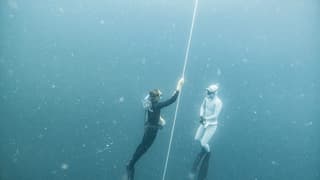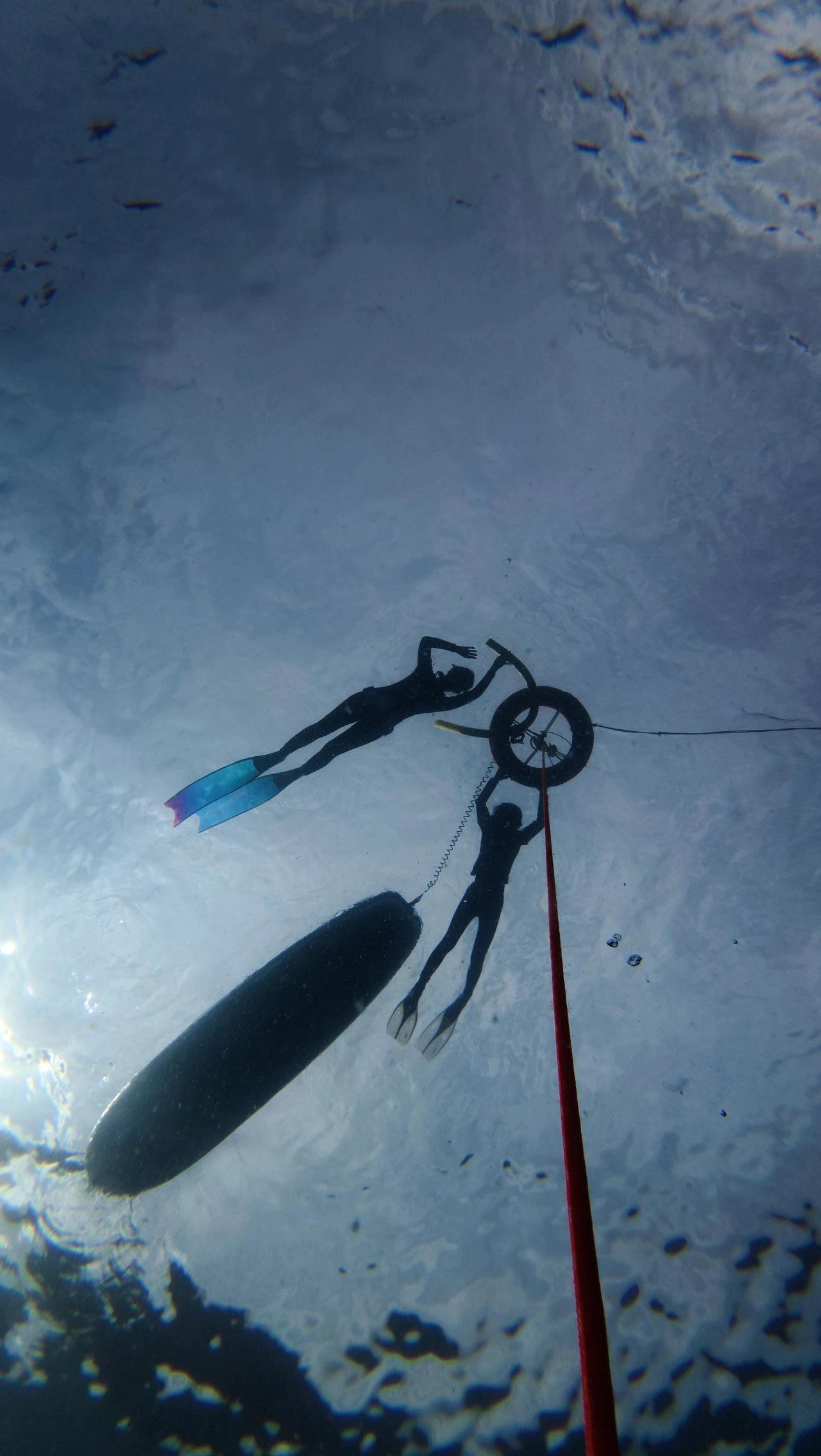
Static apnea is a breath-hold discipline performed without swimming, usually face-down in a pool. It should be trained with direct buddy supervision, calm breathing, agreed stop conditions, and conservative holds; maximal or solo attempts are the wrong starting point.
Static apnea is the breath-hold discipline where the diver stays still, usually face-down in a pool, and measures time rather than distance or depth. It looks simple because there is no descent or swimming, but the hypoxia risk is real.
The useful beginner goal is not a personal-best hold. It is learning calm setup, direct buddy supervision, recovery breathing, and when to stop. Use static apnea as a controlled training tool inside a course or supervised session.
What static apnea is
Static apnea measures breath-hold time while the body stays mostly still. In competition, it is a formal pool discipline with safety teams and strict surface protocol.
In training, static can help relaxation and CO2 tolerance, but only when the session is structured conservatively and watched closely.
Why static apnea can still be risky
Stillness does not remove blackout risk. Hyperventilation can delay the urge to breathe, and long holds can still produce hypoxia. DAN safety guidance is clear that breath-hold diving needs training and direct supervision.
Static apnea also creates a false sense of control because it happens in shallow water. Shallow water is still water; if consciousness is lost face-down, immediate rescue matters.
How a safe session is structured
Agree the maximum hold, signals, recovery breathing, and stop conditions before anyone starts. The buddy watches the active diver continuously and stays close enough to support the airway immediately.
Avoid hyperventilation. Keep preparation breathing calm. Stop after any loss of motor control, blackout, confusion, unusual symptoms, or failed surface protocol.
What beginners should train first
Beginners should train relaxation, body scan, gentle urge-to-breathe awareness, and clean recovery, not maximal breath-hold time. Pair static work with the freediving safety guide and a real course.
If you want more breath-hold comfort, use CO2 tables conservatively and keep water practice supervised.
Common questions
Can I train static apnea alone?
No. Static apnea can lead to hypoxic blackout and should be trained only with direct supervision by a trained buddy.
Is static apnea useful for beginners?
It can build relaxation and awareness, but beginners should keep it conservative and course-aligned.