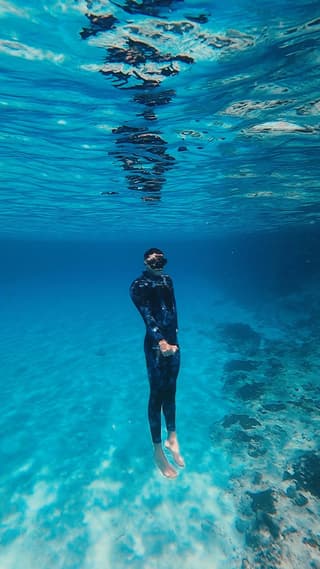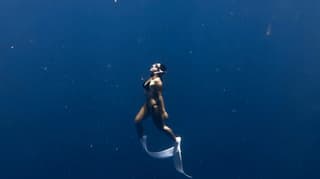
Most first-course freedivers work around 10 to 20 meters, intermediate divers often train around 30 to 50 meters, and advanced depth requires coaching, reliable equalization, and stronger safety planning. Depth is useful only when it fits your training level, conditions, and safety support.
Most trained beginners dive somewhere around 10 to 20 meters in a first course, many intermediate freedivers train around 30 to 50 meters, and advanced divers may work between 50 and 80 meters with a coach. Elite competitive depth is a different world: AIDA lists Alexey Molchanov's 136m CWT as the current men's constant-weight record.
Depth is not a universal score. Equalization, safety support, water conditions, narcosis risk, and your current certification limits matter more than the number on the line.
Typical depth by training level
A complete beginner may only need 5 to 10 meters to learn duck diving, line orientation, and pressure awareness. A first open-water course often works toward roughly 10 to 20 meters, depending on agency standards, conditions, and the student's equalization.
Intermediate divers commonly train between 30 and 50 meters. At that point, Frenzel consistency, relaxation, freefall control, and recovery breathing matter more than fitness. Advanced divers who train between 50 and 80 meters usually need mouthfill foundations, stronger safety planning, and coaching feedback.
What limits depth first
Equalization is usually the first hard stop. Valsalva becomes unreliable as depth increases because the chest is compressed and the diaphragm has less ability to push air upward. Most divers need reliable Frenzel equalization before depth progression feels calm.
Below beginner depths, lung compression, nitrogen narcosis, thermal stress, current, visibility, and repeated-dive fatigue all become more important. These are reasons to train with a school or coach rather than copying elite depth profiles.
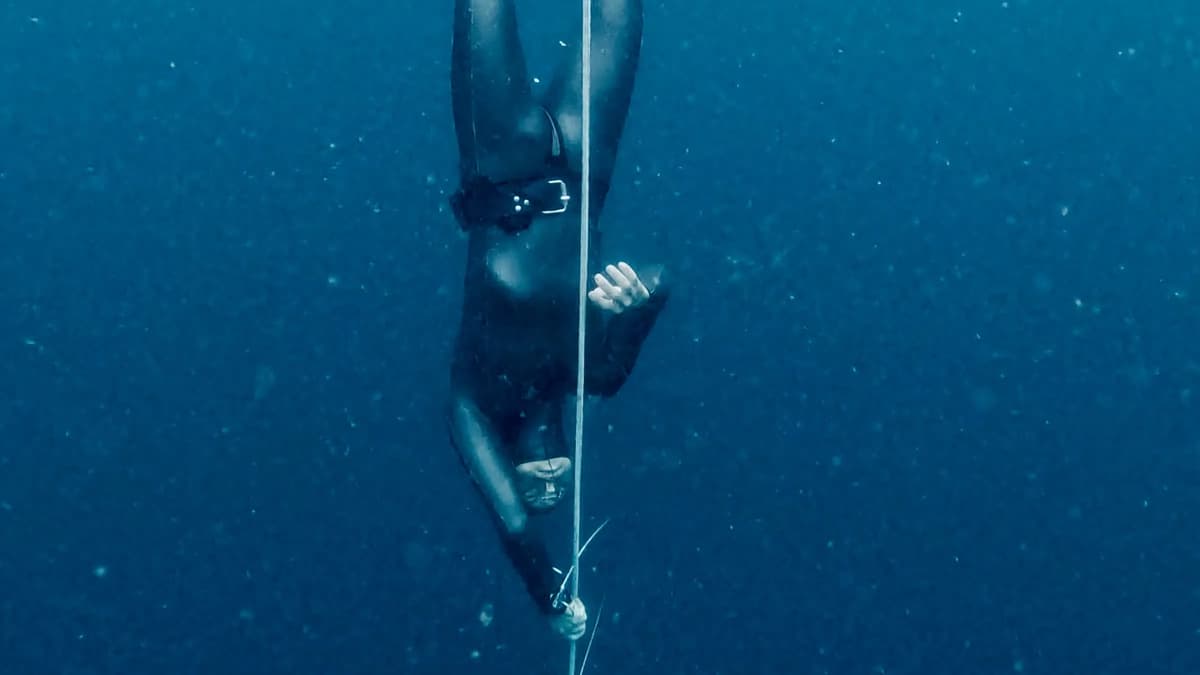
How to progress safely
Progress by consolidating a comfortable depth before adding meters. A conservative session might repeat the same depth several times with clean equalization, stable turn, calm ascent, and a clear surface protocol before moving deeper.
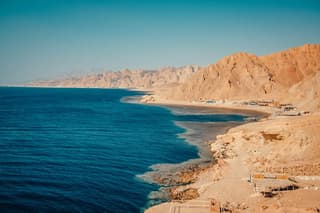
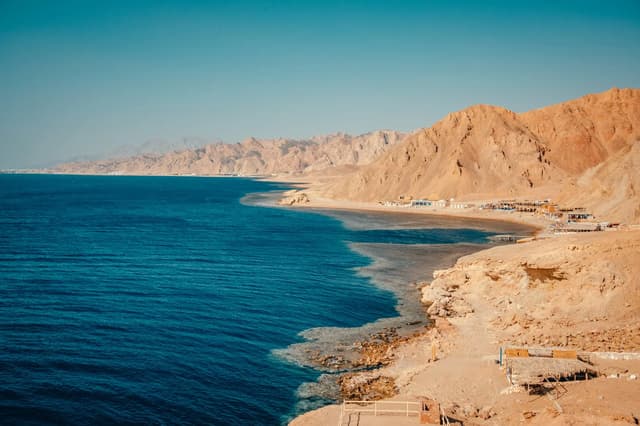
Choose destinations that match your current level. Dahab, Dean's Blue Hole, Koh Tao, Bali, and Panglao can all work, but the right school and conditions matter more than maximum depth.
Depth is not the point
A technically clean 20m dive can be better training than a tense 35m dive. Good freedivers can explain their dive plan, safety coverage, equalization strategy, and stop conditions before they talk about a personal best.
If you are choosing where to train next, compare freediving schools by coaching quality, line setup, safety culture, and the depths they routinely support for your level.
Common questions
How deep can a beginner freedive?
Most beginners reach 10 to 20 meters after a beginner course. Entry-level courses are typically capped around 20 meters; going deeper is a goal for later coached training, not your first course.
What is the main thing that limits freediving depth?
Equalization is the most common limiting factor. Most divers hit a wall between 25 and 35 meters where Valsalva stops working and they need to learn Frenzel or mouthfill technique.
Is freediving to 40 meters dangerous?
Not inherently, but it requires proper training, a safety buddy, correct weighting, and solid equalization technique. Most intermediate-level trained divers can reach 40 meters safely.