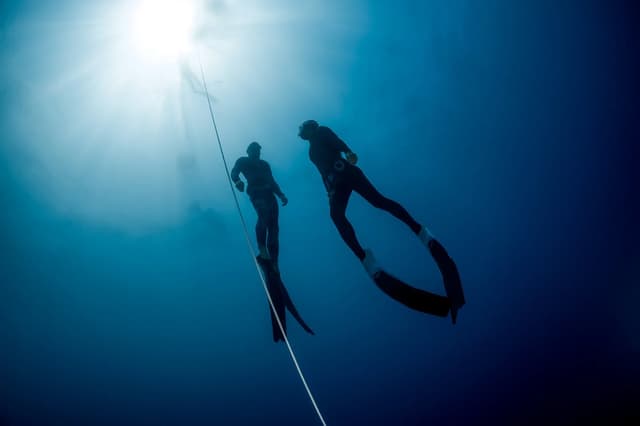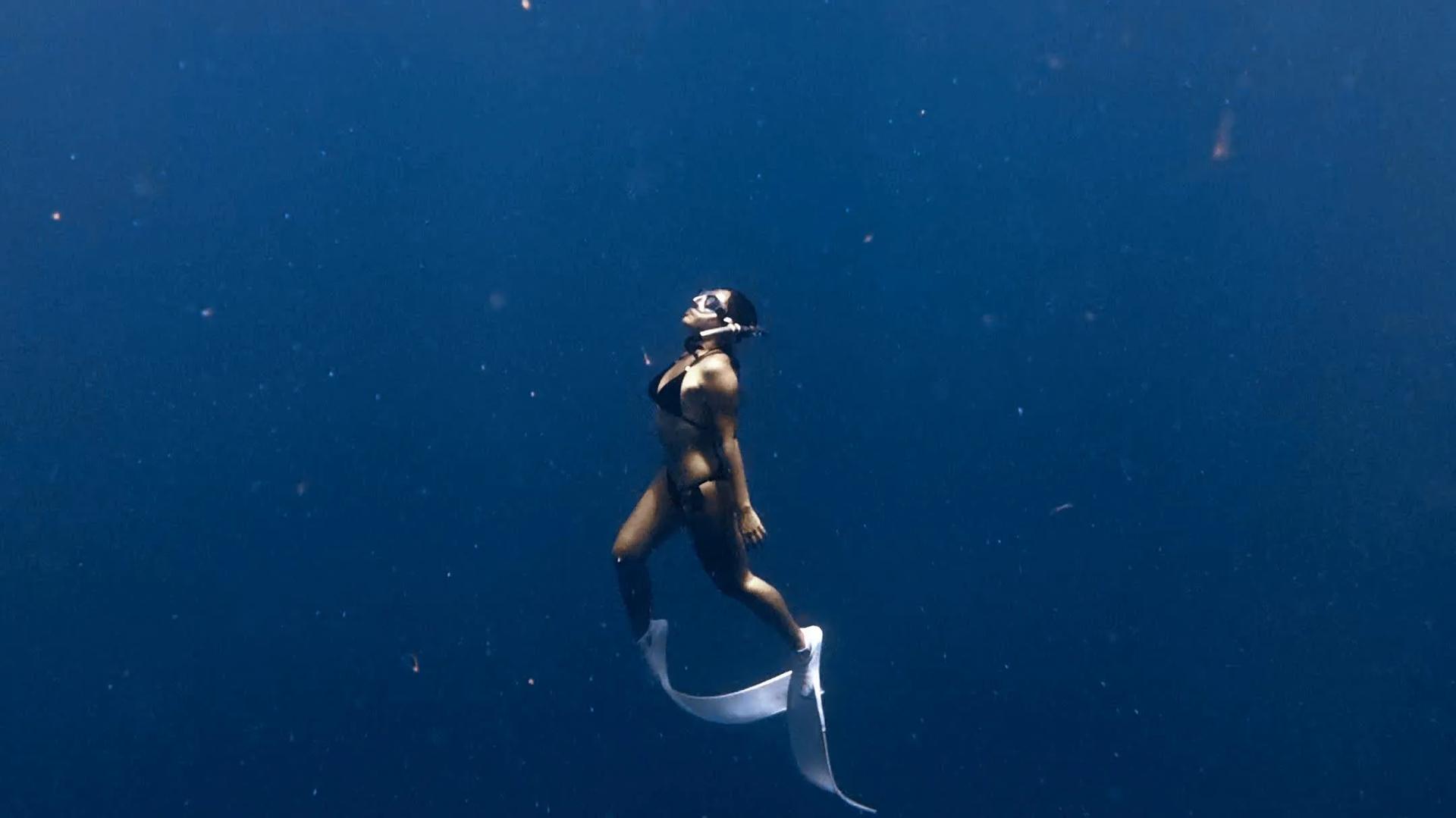
Skill, physiology and confidence change with experience, but they are not interchangeable. Comfort at a depth does not establish that a deeper dive is safe.
Divers use “depth adaptation” to describe several different things: learning equalization, becoming familiar with a setting, and the body’s response to immersion and pressure. Keeping these separate helps explain why a comfortable dive is useful feedback but cannot establish a safe limit for the next one.
Separate skills from physiological responses
Equalization is a learned coordination skill. Pressure changes the air volume available during descent, but there is no universal depth at which everyone must switch from Frenzel to mouthfill. A coach should identify the limitation in your technique before changing the method.
Immersion and breath-holding can slow the heart rate and redistribute blood toward the chest. Pressure also reduces lung gas volume. These responses interact, but they do not eliminate the possibility of lung injury.
Finally, familiar conditions can feel less stressful with experience. That improved confidence is useful feedback, but it does not measure tissue tolerance or the margin available on the next dive.
Disorientation at depth
Nitrogen narcosis has been reported in deep breath-hold diving. The physiology literature includes few documented cases, so it does not establish a dependable onset depth for an individual diver.
Confusion or a memory gap should not be self-diagnosed as narcosis. End the session and seek medical assessment after unexplained neurological symptoms; persistent confusion, weakness or breathing difficulty warrants emergency care.
What should not be forced
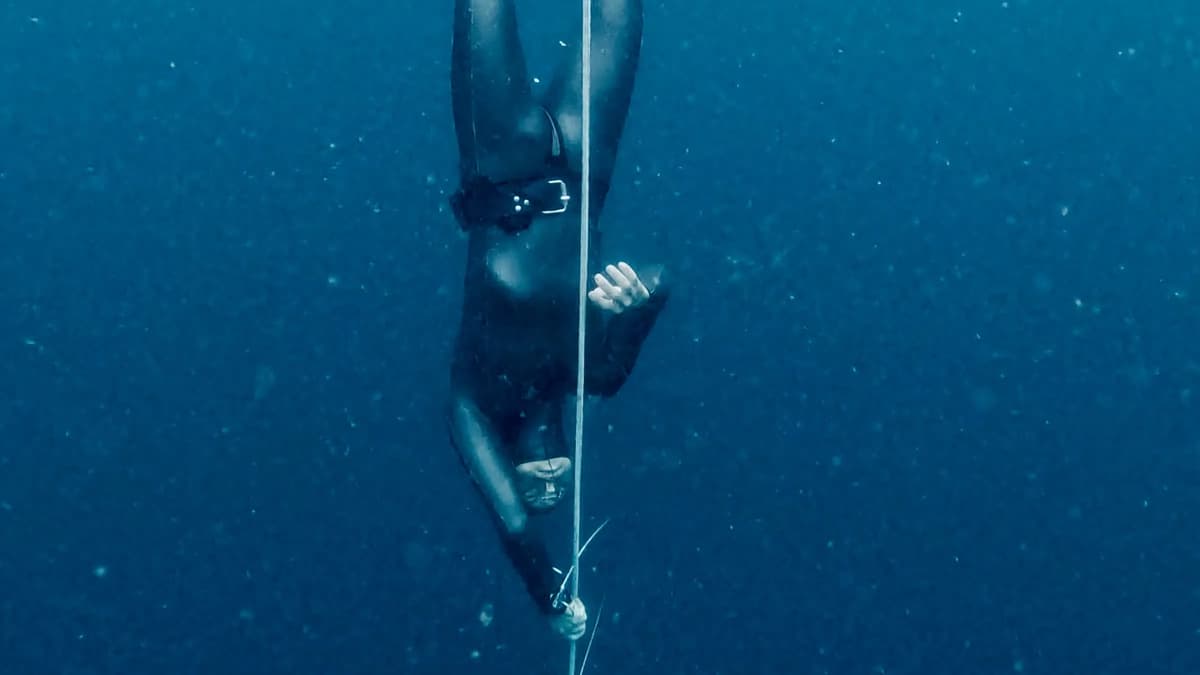
End the descent if equalization fails or pain appears. Do not use a previous comfortable dive as a reason to force the next one. Ear, sinus and chest symptoms need attention rather than a larger depth target.
A diving response is not a progression schedule. No number of practice dives guarantees that the lungs can tolerate a particular pressure. Discuss progression with a qualified depth coach and medical symptoms with a clinician.
How to progress conservatively
Agree the next task with your coach before entering. Review equalization, technique, conditions and the safety team’s capacity together. A plan can call for repeating a familiar task or ending the session without adding depth.
Every in-water breath hold needs trained supervision, including shallow practice. For depth sessions, agree how safety divers will cover the ascent and surface recovery. Read the buddy-system guide alongside your course procedures.
Keep a useful progression record
Record conditions, technique, comfort, the coach’s observations and why you turned. A comfortable repeat of an agreed task is useful information even if the depth number does not change.
Ask your coach which observation supports the next step and which would pause progression. Keep pressure symptoms and medical questions separate from performance goals; neither a travel deadline nor a personal best resolves them.
Common questions
Can freedivers really get nitrogen narcosis on a single breath?
Yes, nitrogen narcosis has been reported during deep breath-hold dives, but published cases are limited. Do not treat an onset depth quoted in an article as a safe boundary, or assume confusion will resolve harmlessly during ascent.
How fast can I safely add depth?
There is no universal safe increment. Set the next task with a qualified coach based on your technique, recent sessions, conditions and available safety support. Feeling relaxed is one observation, not clearance to add depth.
What is blood shift and is it something I train?
Blood shift describes increased blood volume in the chest during immersion and diving. It helps explain how divers accommodate compression, but it does not prevent every lung injury. It is not a skill you can certify as “trained” by repeatedly reaching a depth.
What should make me turn a dive immediately?
End the descent for failed equalization, pain or unexpected disorientation, and use the assistance arranged in your dive plan. Stop the session for concerning symptoms and seek medical care rather than assigning the cause yourself.