Freediving equalization usually fails because of late timing, tension, force, or a technique that was not automatic before the dive. Build frequent gentle Frenzel actions at shallow depth, stop on pain, and get coaching before adding meters.
Freediving equalization is the skill of balancing pressure in your ears and sinuses while descending. Beginners usually need Frenzel: a tongue-driven technique that moves air without relying on the diaphragm.
Most equalization problems are not solved by pushing deeper. They are solved by starting earlier, relaxing the neck and jaw, slowing the descent, and getting feedback while the dive is still shallow and repeatable.
Why equalization fails
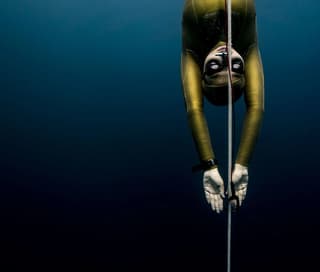
The common failures are late timing, jaw tension, looking down the line with a bent neck, and trying to force pressure after the ear already feels blocked. Force is a bad sign: pain means stop, ascend a little, and reset.
Beginners should learn the difference between Valsalva and Frenzel on land before expecting it to work underwater. If the technique is fragile on the surface, depth will make it worse.
The timing pattern to build
Equalize before pressure becomes uncomfortable, then repeat small actions often. A calm descent with frequent gentle equalizations beats a fast descent followed by a panicked correction.
The first few meters are where habits form. If you miss equalizations near the surface, do not chase the dive. Turn early, breathe up, and repeat the shallow pattern.

Choose the right place to practice
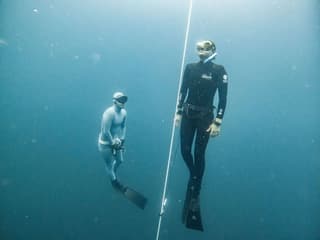
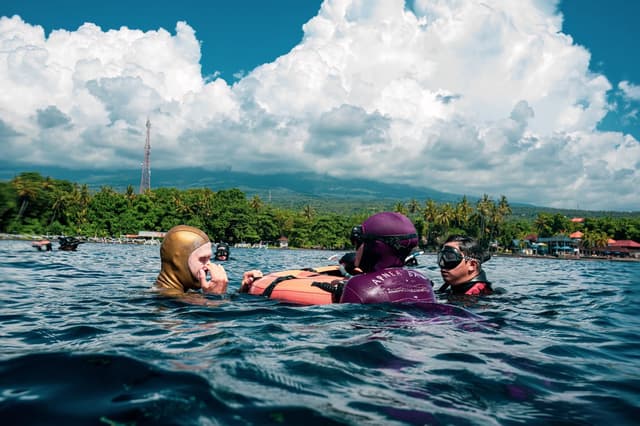
Dahab is popular because line access and coaching density make repetition easy. Bali and Koh Tao can also work well when you want warm water and schools that routinely troubleshoot beginner equalization.
The best practice site is not always the deepest one. It is the one where you can stop, ask a coach what changed, and repeat without current, boat pressure, or group ego driving the session.
What to work on between sessions
Dry Frenzel drills, soft-palate awareness, relaxed posture, and slow head-position checks can help, but dry drills do not replace in-water coaching. They prepare you to understand feedback once you are on a line.
If equalization blocks your progression, choose a school that can explain the failure clearly. Browse freediving schools and ask whether they teach Frenzel troubleshooting, mouthfill foundations, and equalization-specific coaching.
Common questions
Should beginners push through equalization pain?
No. Pain is a sign to stop, reset, and address technique rather than force the descent.
Can a beginner fix equalization with depth alone?
Usually no. Most equalization problems need better timing and body position, not more depth attempts.
Which destinations are good for learning equalization?
Look for places with calm, repeatable training conditions and experienced coaching rather than just maximum depth.