Choose freediving fins in this order: a foot pocket that stays comfortable, a blade stiffness your technique can move efficiently, and a material durable enough for your training and travel. Carbon is an upgrade, not a prerequisite.
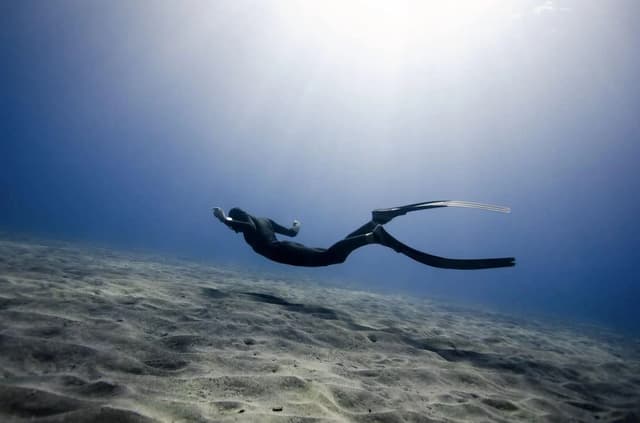
Freediving fins are longer than most snorkeling or scuba fins because the larger blade can turn a slow, controlled kick into useful propulsion. That efficiency only appears when the foot pocket fits and the blade matches your technique. A premium blade that cramps your feet or forces your knees to bend is the wrong fin.
For a first course, comfortable plastic bifins are usually enough. Rent or test several pairs if you can, then upgrade when you can describe the problem you want a different fin to solve: fatigue, travel weight, blade response, current, or competition performance.
Why freediving fins are long
Long blades move more water per kick, allowing a freediver to use a slower rhythm than short snorkeling fins. That can reduce wasted movement during a descent or ascent, but length alone does not create efficiency. A kick driven mainly from the knees will still waste energy and may make a long blade feel heavy.
The extra length also has costs. Long fins are awkward on boats, easy to scrape during rocky entries, and harder to pack. If most of your diving is casual surface swimming, travel, or confined water, a shorter freediving blade may be a more practical compromise than the longest model available.
Use a course or coached session to work on a relaxed, hip-led kick before judging blade performance. The freediving training guide explains where fin technique fits alongside pool and open-water practice.
Plastic vs fiberglass vs carbon freediving fins
Plastic blades are the sensible baseline. They tolerate luggage, shore entries, rental use, and beginner mistakes better than composite blades. They are usually heavier and less responsive, but that difference matters less than comfort and technique during a first course.
Fiberglass sits in the middle. A well-matched fiberglass blade can feel smoother and more responsive than plastic while remaining less expensive than many carbon options. It still needs protection from hard impacts, sharp bends, and careless packing.
Carbon fiber blades are light and responsive, which is valuable when a trained diver is trying to reduce effort over repeated dives or improve competition performance. Carbon is also costly and vulnerable to edge damage or impact. Buy it because testing shows a useful difference for your diving, not because elite athletes use it.
There is no universally best material. A durable plastic fin that you can train with every week is a better tool than a carbon fin that fits poorly, is too stiff, or stays home because you are worried about damaging it.
Choose blade stiffness before chasing performance
Soft or medium-soft blades are the usual starting point because they let you maintain a controlled kick without fighting the fin. Stiffer is not automatically faster. If the blade demands more force than your ankles and technique can deliver cleanly, your calves and quadriceps do extra work while the blade produces less useful movement.
Body size matters, but it is not a complete stiffness chart. Ankle mobility, kick amplitude, pace, blade length, water conditions, and experience all change how a fin feels. Strong divers may still prefer soft blades for economy, while current or specialized sprint work can change the decision.
Test fins in the water when possible. Watch for foot cramps, burning calves, bent knees, a bicycle-style kick, or a feeling that the blade never finishes its flex. Those are better clues than a generic soft, medium, or hard label, which is not standardized across manufacturers.
Foot-pocket fit matters more than blade hype
A foot pocket should hold your heel securely without crushing your toes or creating pressure points across the top of the foot. Test it with the socks you will actually wear. Neoprene thickness changes fit, and a pocket that feels acceptable for two minutes in a shop may become painful during an hour on a buoy.
Check whether the blade is fixed or replaceable. Replaceable systems can let you keep a comfortable pocket when you change materials, but rails, angles, screws, and blade shapes are not universally compatible. Confirm compatibility before treating a blade and pocket as separate purchases.
Do a wet test if the shop or school allows it. Use a supervised, site-appropriate entry and exit, float at the surface, complete relaxed laps, and make several easy descents. Heel lift, toe numbness, rubbing, or cramps are reasons to try another size or shape rather than hoping the pocket will transform with use.
Bifins or a monofin
Bifins are the default for courses, recreational depth, safety work, and most travel. Each leg moves independently, surface positioning is easier, and the technique transfers from equipment most beginners already know.
A monofin connects both feet to one blade and uses a dolphin kick. It can be highly efficient in trained hands, but it requires specific mobility, body position, turns, and safety practice. It is best treated as a separate discipline rather than a faster replacement for beginner bifins.
Start with bifins unless your coach and training goal point clearly toward monofin technique. A school can let you test both in a controlled setting; compare freediving schools by destination and course path before buying specialized equipment.
A practical buying sequence
First, take a course or rent fins that are close to what you may buy. Second, choose a foot-pocket shape and sock thickness that remain comfortable in the water. Third, select a soft or manageable blade for your normal sessions. Only then compare plastic, fiberglass, and carbon within your budget.
Include transport in the decision. A rigid fin bag, removable blades, or shorter travel fins may save more frustration than a marginal performance upgrade. Rinse fins after salt water, keep composite blades away from hard edges, and do not leave them bent under luggage or in prolonged heat.
If you are planning a first training trip, the beginner freediving guide helps you choose the course and destination before committing to gear that may not suit the local conditions.
Common questions
What type of freediving fins should a beginner buy?
Plastic bifins with comfortable foot pockets and soft or medium-soft blades are the most practical default. They are durable, relatively affordable, and useful while your kick technique is still changing.
Are carbon freediving fins worth it?
Carbon fins can feel lighter and more responsive, but the benefit depends on good technique and correct stiffness. They cost more and need more careful handling, so many recreational divers are better served by plastic or fiberglass.
Why are freediving fins so long?
A longer blade moves more water through each controlled kick, which can improve propulsion for the effort used. The tradeoff is that long fins need better technique, more room, and more care during travel and shore entries.
Should freediving fins be soft or stiff?
Most beginners should start softer. The right stiffness also depends on your body, ankle mobility, technique, blade design, and whether you dive in current. A blade that is too stiff often adds fatigue without useful speed.