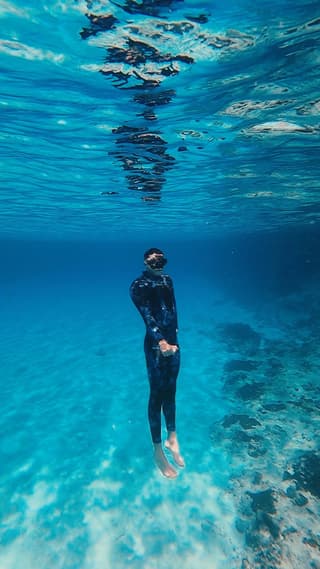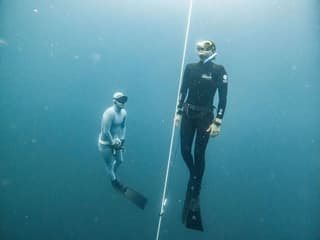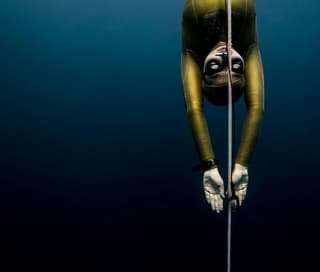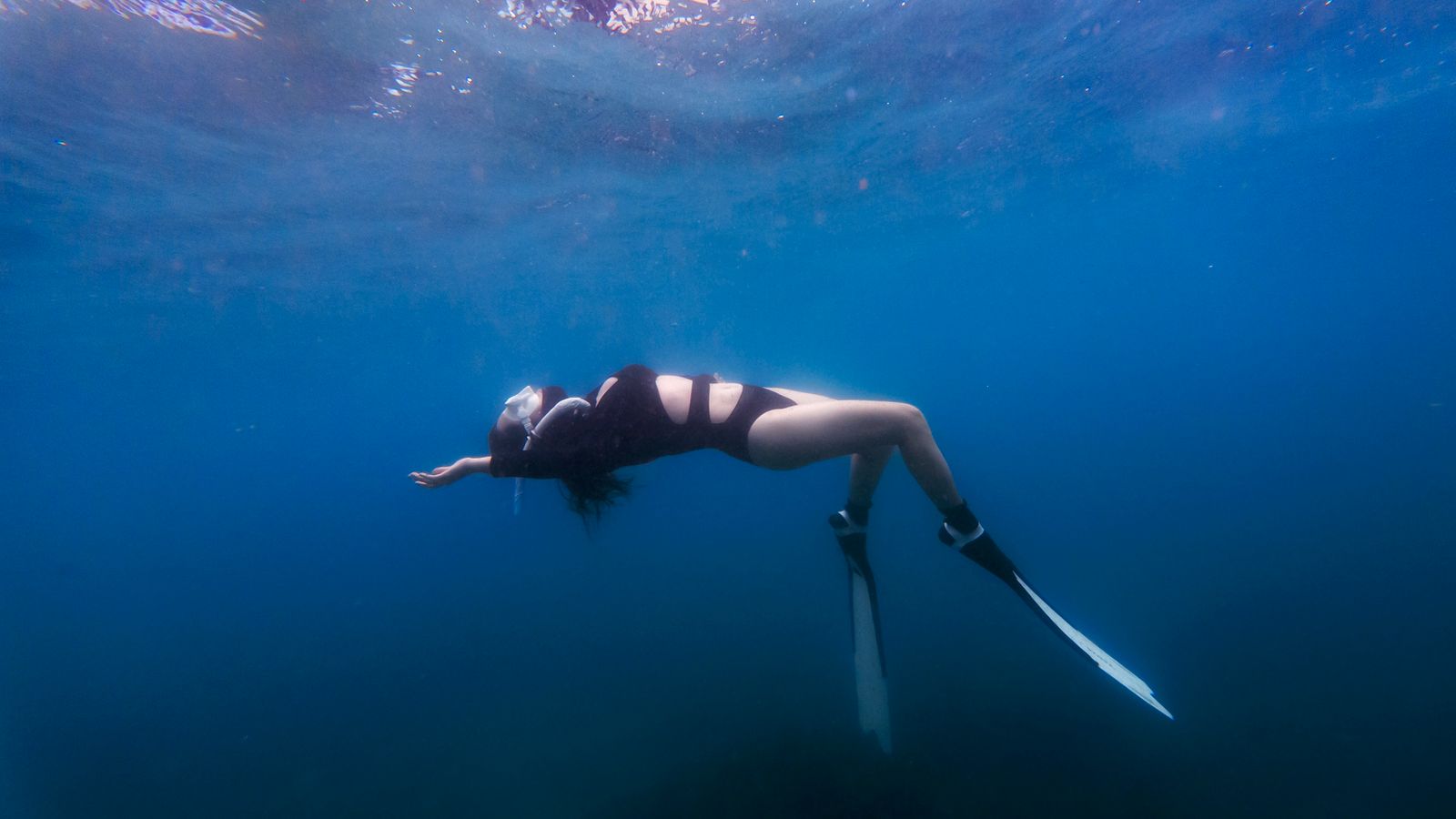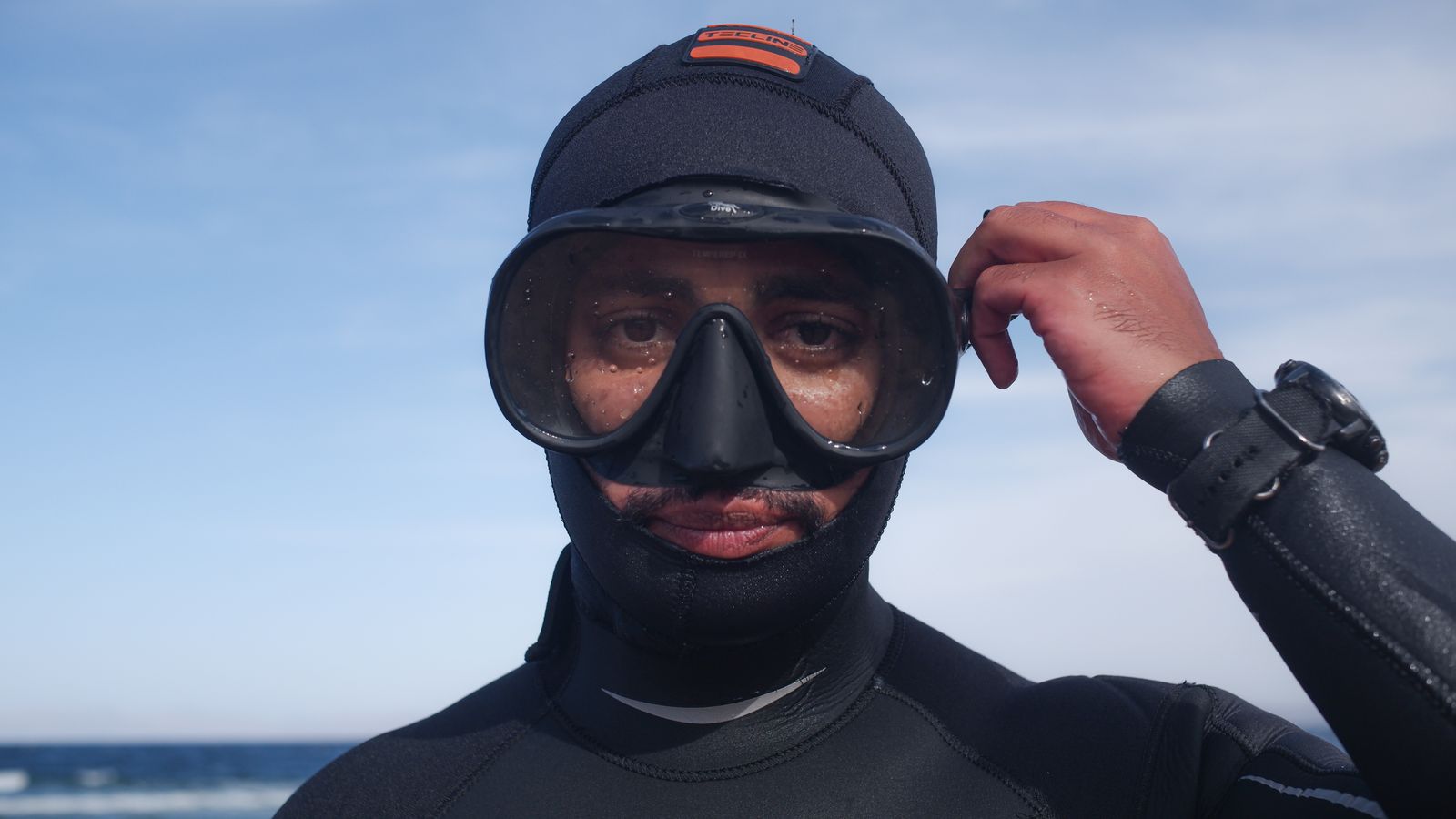
A low-volume freediving mask is the practical choice for almost every beginner. It lets you see normally, pinch your nose, and equalize the mask air space. Fluid or self-equalizing goggles are specialist depth equipment used with a noseclip and coaching.
Choose a low-volume freediving mask for a first course and most recreational diving. It gives clear, usable vision above and below water, covers the nose so you can equalize the mask, and works with the nose-pinching techniques beginners usually learn.
Fluid goggles, self-equalizing goggles, and noseclips solve different problems for advanced depth divers. They are not ordinary swimming goggles and they are not an automatic upgrade. Use them only when your equalization method, coaching, and safety routine are ready for the change.
A low-volume mask is the best beginner default
Every conventional mask creates an air space between your face and the lens. As pressure increases during descent, you add a small amount of air through your nose to keep that space comfortable. A low-volume mask holds less air, so it generally takes less air to equalize than a larger scuba-style mask.
Low volume is useful, but it does not rescue a poor fit. A tiny mask that presses on the bridge of your nose, leaks around your cheeks, or makes the nose pocket hard to pinch will distract you more than a slightly larger mask that seals comfortably.
You can often use a familiar scuba mask for shallow introductory work if it fits and equalizes cleanly. For regular freediving, a comfortable low-volume design is usually easier. Try school equipment during a freediving course before treating specifications as a substitute for fit.
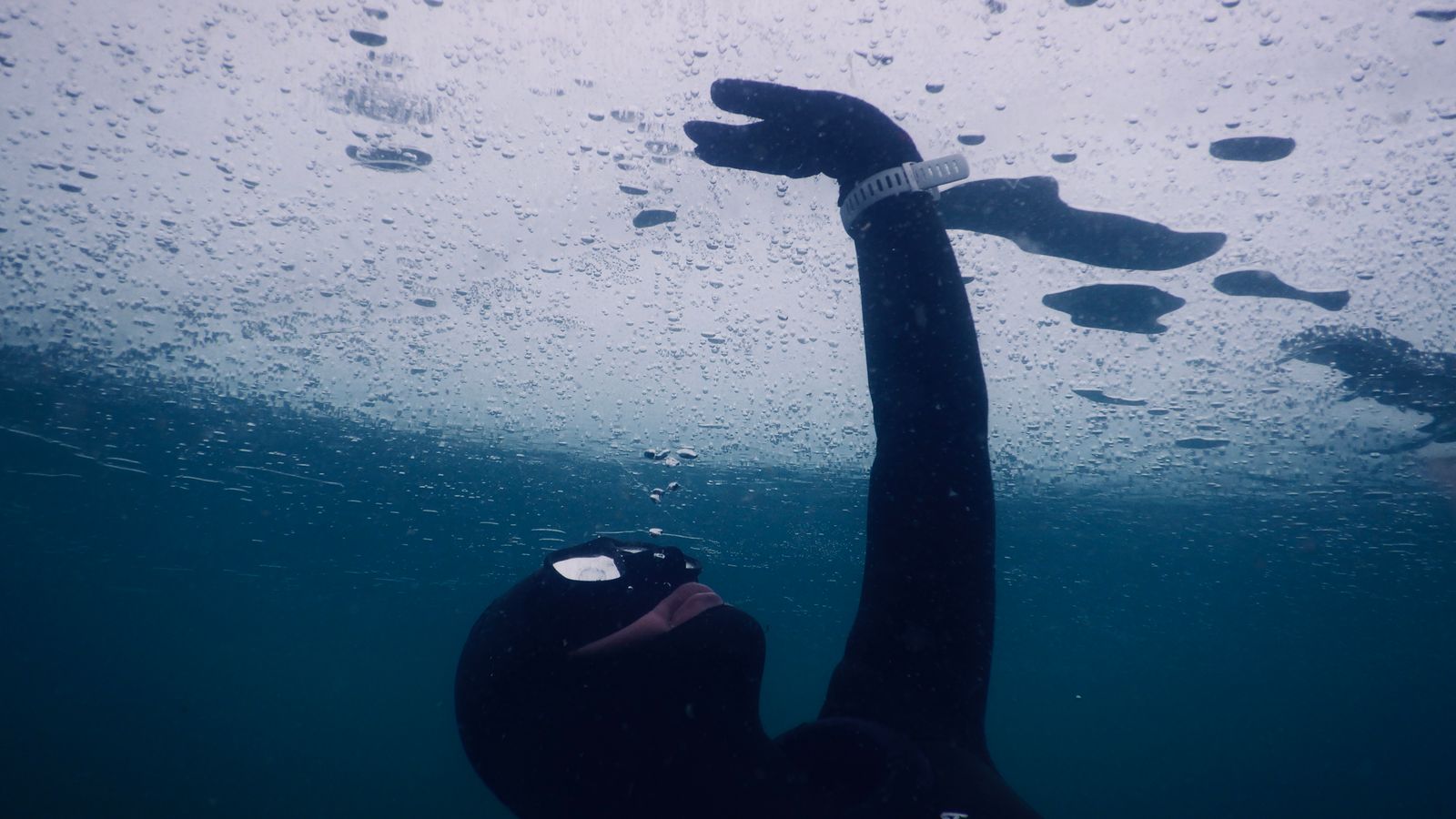
How to test a freediving mask for fit
Move the strap out of the way, place the mask gently on your face, and inhale lightly through your nose. The skirt should make an even seal without painful suction or pressure. Then release it and check that the skirt was not folded around hair, eyebrows, or facial hair.
Put the strap on loosely and reach for your nose as if you were equalizing. You should be able to pinch the nostrils without digging around the skirt or pushing the mask out of position. Open and close your jaw, turn your head, and check for pressure at the brow and bridge of the nose.
A dry seal test is only a shortlist. If possible, try the mask in water and use it for several easy descents. Face shape is personal, so a mask with strong reviews or a popular brand name can still be the wrong mask for you.
Compare volume, lenses, skirt, and nose pocket
Start with four criteria: a reliable seal, low internal volume, a soft skirt, and a nose pocket you can use with your equalization technique. Field of view matters for seeing the line and buddy, but extreme low volume sometimes brings the lenses or frame uncomfortably close to the face.
Clear lenses make it easier for a buddy to observe your eyes and facial response. Mirrored or heavily tinted lenses may help with glare in some conditions, but they reduce that visual communication. For general training, safety and fit are more useful than styling.
Confirm that the lens is intended for diving and follow the maker's care instructions. Tempered-glass and plastic lenses need different defogging and cleaning methods; abrasive treatments that are common for one material can damage another.
Ordinary swimming goggles are not depth equipment
Ordinary swimming goggles trap air over each eye but do not connect that air space to your nose. You therefore cannot add air to equalize them as you descend. Increasing pressure can pull the goggles and soft tissue inward, so standard air-filled goggles should not be used for depth freediving.
Removing the nose pocket also changes how you equalize your ears. A separate noseclip is normally paired with specialist freediving goggles, and that setup affects breathing, surface communication, recovery, and rescue procedures. It should be introduced deliberately rather than improvised during a dive.
If equalization is the reason you are considering a noseclip, start with the freediving equalization guide and work with an instructor who can see what your technique is doing.
Fluid and self-equalizing goggles are specialist options
Fluid goggles are filled with seawater or saline so there is no compressible air space over the eyes. Their corrective lenses are designed to restore useful underwater vision, but vision above water is limited and the sensation of immersed eyes takes practice. They are normally used with a noseclip.
Self-equalizing goggles use a flexible design that compresses during descent instead of holding a fixed air space like ordinary goggles. They also pair with a noseclip and may feel uncomfortable as they compress. Neither type is a first-course necessity.
These systems can reduce the need to spend air on a mask and free both hands for advanced equalization, which is why some deep divers use them. Those gains only matter after you have adapted the complete dive and safety routine with qualified coaching.
Equalize the mask and stop if it squeezes
A mask still needs equalization during descent. Exhale small amounts through your nose as pressure builds; do not wait for strong suction or pain. An overtight strap does not prevent a leak and can make a mask less comfortable.
DAN describes mask squeeze, or facial barotrauma, as an injury caused when the mask air space is not equalized. Warning signs can include suction, pain, swelling, bruising, or redness around the eyes. End the dive if the mask is squeezing rather than pushing through it.
Eye pain, visual disturbance, or significant symptoms need prompt medical evaluation. Do not return to diving until a physician recommends it. Then address fit, congestion, descent speed, and technique with a qualified professional. The goal is not to tolerate squeeze; it is to prevent it.
Make the buying decision in the water
For most divers the sequence is simple: borrow or rent several low-volume masks, shortlist those that seal comfortably, confirm easy nose access, and test the finalists during controlled dives. Buy the one you forget you are wearing.
Consider specialist goggles only when you have a specific depth or hands-free equalization goal and a coach who already teaches the setup. If you are still choosing your first training environment, compare freediving schools before buying equipment the course may provide.
Common questions
What is the best freediving mask for a beginner?
A comfortable low-volume mask with an easy-to-pinch nose pocket is the best default. It should seal without an overtight strap and let your buddy see your eyes clearly.
Can you freedive with ordinary swimming goggles?
Do not use ordinary air-filled swimming goggles for depth. Their eye air spaces cannot be equalized through your nose, so pressure can cause injury. Specialist fluid or self-equalizing goggles work differently and need proper instruction.
Why do freedivers use low-volume masks?
A smaller air space generally needs less air to equalize during descent. Low volume helps, but a comfortable seal and accessible nose pocket matter more than choosing the smallest mask on paper.
Why do some deep freedivers use goggles and a noseclip?
Fluid or self-equalizing goggles reduce or remove the mask air-space problem, while a noseclip supports hands-free equalization. The setup is specialized, changes surface vision and safety routines, and should be learned with a qualified coach.