Start with water temperature, then adjust for session length, wind, depth, and how quickly you get cold. The correct freediving wetsuit keeps you warm without restricting a full breath, and its buoyancy must be included in your weighting plan.
A freediving wetsuit has two jobs: slow heat loss and let you breathe and move without fighting the suit. Thickness is only the first filter. A poorly fitted 5 mm suit can flush cold water, while an overly tight 3 mm suit can restrict your inhale and shoulders.
Use temperature charts as starting points, not rules. Time in the water, surface wind, repetitive dives, body composition, depth, and personal cold tolerance all affect the choice. When in doubt, ask the school what its divers wear for the same month and session type.
Freediving wetsuit thickness by water temperature
For roughly one-hour recreational sessions, a useful starting guide is 1 to 1.5 mm in water around 28°C or warmer, 3 mm around 24 to 28°C, 5 mm around 18 to 24°C, and 7 mm near 16 to 17°C or colder. These ranges follow current manufacturer guidance, but they are deliberately broad because cold tolerance varies substantially.
| Water temperature | Starting thickness | What may change it |
|---|---|---|
| 28°C+ / 82°F+ | 1–1.5 mm | Sun, wind, long surface intervals |
| 24–28°C / 75–82°F | 3 mm | Session length and cold tolerance |
| 18–24°C / 64–75°F | 5 mm | Hood, socks, gloves, thermoclines |
| 16–17°C / 61–63°F or colder | 7 mm | Cold-water coaching and full exposure plan |
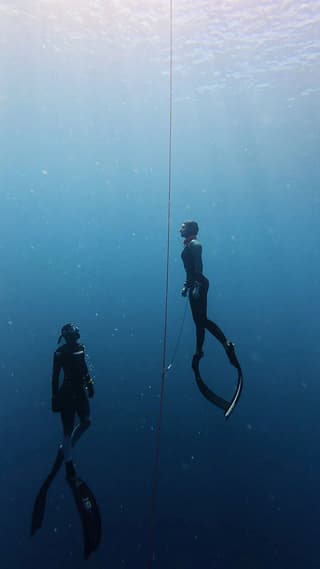
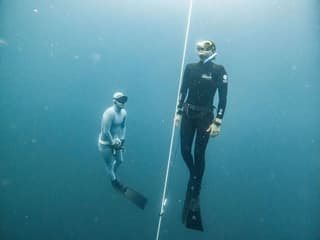
Add warmth for long line sessions, repeated dives through a thermocline, wind on the surface, or a boat ride between dives. A dynamic pool session produces more heat than waiting on a buoy, so one suit rarely covers every type of training perfectly.
Destination pages help with the first estimate. Warm-water training in Bali usually starts thinner than winter sessions in the Mediterranean, but local schools should confirm the current temperature and exposure setup.
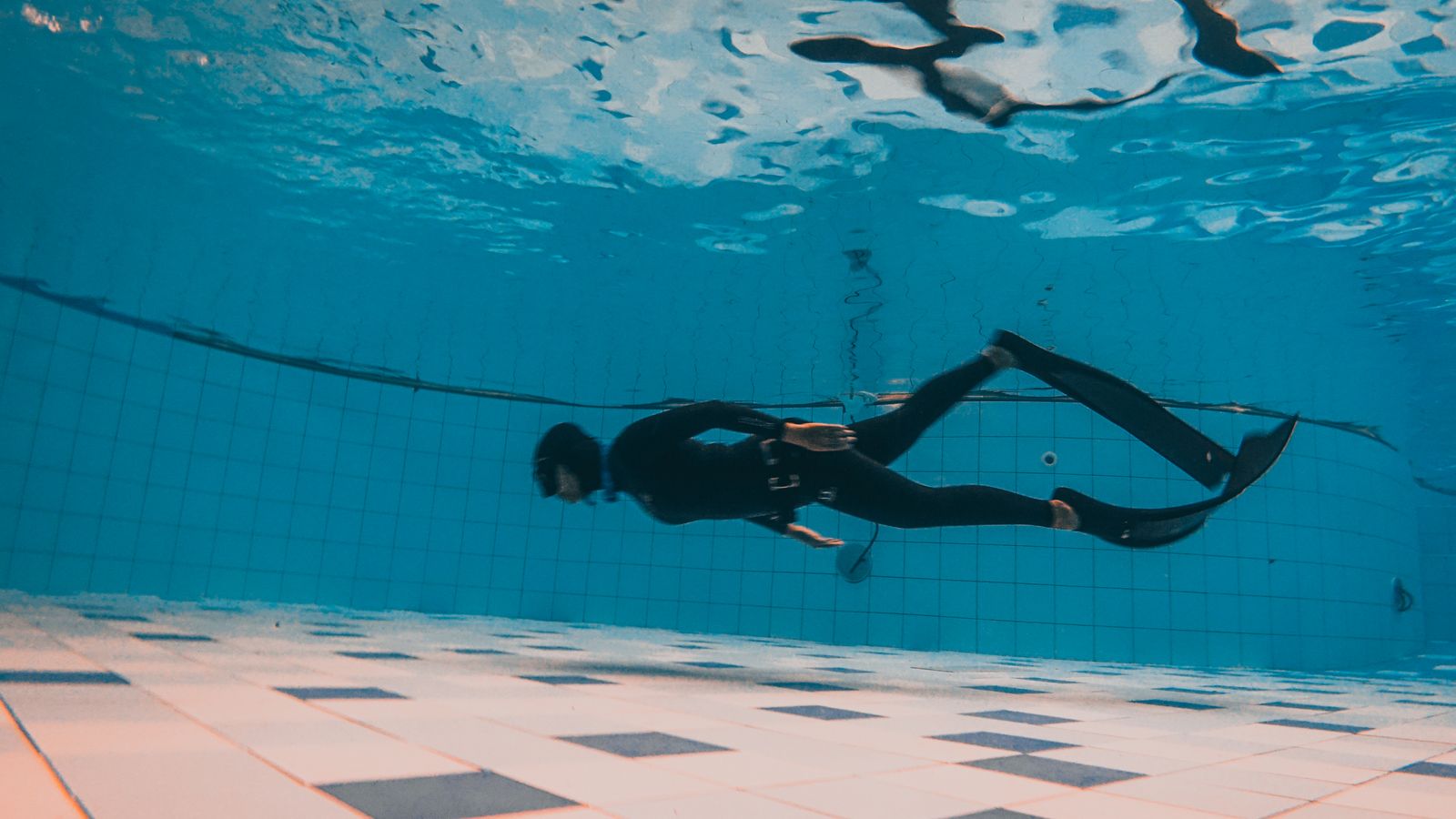
One-piece vs two-piece freediving wetsuits
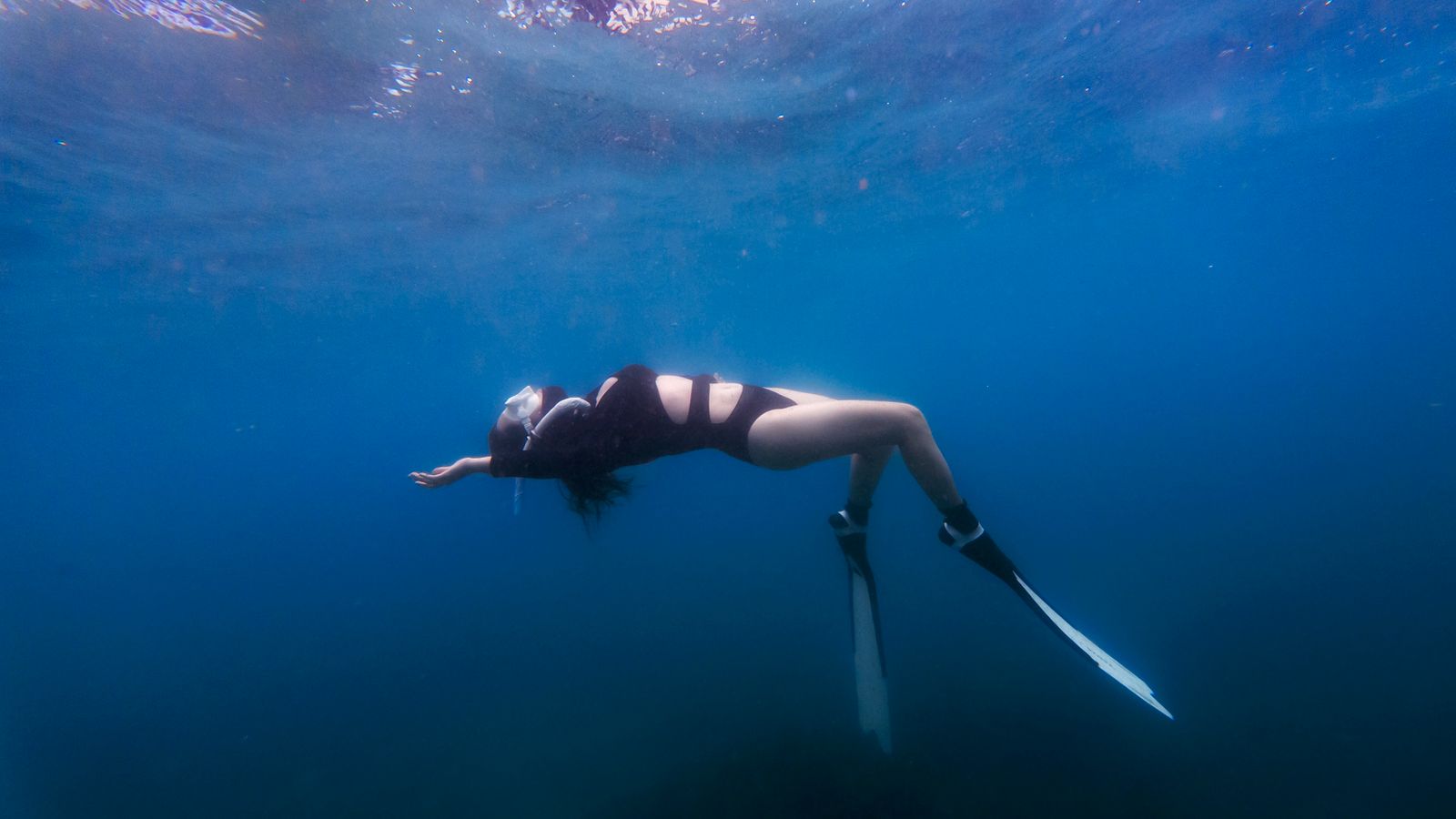
A one-piece suit is simple to put on, easy to rent, and practical for pools or mild water. Zips and thinner panels can make it less flexible or warm than a dedicated freediving suit, but a comfortable one-piece is entirely workable for beginners.
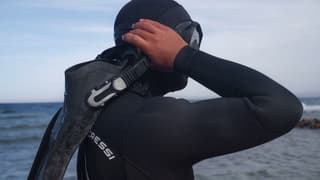
Freediving-specific suits are often two-piece, with high-waist or long-john trousers and a hooded jacket. The overlap around the torso adds warmth and removes the need for a long back zip. The tradeoffs are extra neoprene, more buoyancy, and a more involved dressing process.
Choose the construction for your normal sessions. A tropical traveler may value a durable one-piece, while someone doing long depth sessions in cooler water may value a flexible hooded two-piece. Neither format compensates for poor fit.
Open-cell vs lined neoprene
Open-cell neoprene has unlined rubber against the skin. It conforms closely, limits water movement, and can feel flexible around the chest and shoulders. It is also easy to tear with fingernails and commonly needs a wetsuit-safe lubricant to put on without damage.
A double-lined or fully lined suit is more robust and easier to dress in. That makes it practical for rental fleets, pool edges, travel, and divers who do not want a delicate piece of equipment. It may feel less supple and can allow more water movement if the cut is loose.
Smooth-skin outer surfaces can reduce wind chill and drag, but they are especially vulnerable on boats and rocky entries. Match the material to how carefully you can use and transport it, not only to performance claims.
How a freediving wetsuit should fit
The suit should follow the body without large folds, gaps at the lower back, or loose openings that pump water during movement. At the same time, you should be able to take a comfortable full inhale, raise both arms overhead, rotate the shoulders, and move the neck without strain.
Check the hood and face seal carefully. A seal that presses the jaw or throat can make relaxation difficult, while an open gap can flush cold water. If standard sizes create major folds or restriction, a different pattern or custom fit may be more useful than simply changing thickness.
Try the suit with the swimwear and accessories you will actually use. If possible, test it in water before buying. Neoprene behaves differently when wet, and a suit that feels merely snug in a shop may become either comfortable or restrictive during a full session.
Weighting changes with thickness and depth
Neoprene adds buoyancy near the surface and compresses as pressure increases. A thicker suit often needs more weight at the surface, yet that same setup becomes less buoyant during descent. This is why copying another diver's belt or adding weight until duck dives feel easy is a poor method.
Recheck weighting whenever you change suit, water type, or equipment. Work with an instructor to choose a conservative neutral-buoyancy point for the discipline and course standard. Use a quick-release belt with the release accessible to you and your buddy, and never add weight to solve weak technique.
Keep the freediving safety basics in the same plan. Thermal comfort helps relaxation, but a wetsuit and weight belt do not replace a trained buddy, supervision, or rescue practice.
Socks, gloves, hoods, and small adjustments
Hands and feet may become uncomfortable before your torso. Neoprene socks also change fin fit, so choose sock thickness before finalizing foot pockets. Gloves add warmth but can affect line handling, lanyards, noseclips, and fine adjustments.
A hood reduces heat loss but changes hearing, jaw comfort, and mask interaction. Many two-piece suits include one; with a separate hood, check that overlapping seals do not create pressure or a path for flushing.
Small changes can extend a suit's range, but avoid assembling so many layers that breathing and movement become restricted. If conditions require unfamiliar cold-water equipment, train with a school that works in those conditions regularly.
Rent first, then care for what you buy
Rent for your first course unless hygiene, fit, or repeated use makes an early purchase sensible. Ask the school about actual temperature, typical time on the buoy, available sizes, and whether its rental suits are one-piece or open-cell before packing your own.
Rinse a suit in fresh water after salt or chlorinated sessions, dry it out of direct sun, and store it without sharp folds. Dress open-cell suits slowly with the lubricant recommended by the maker, using flat fingers rather than fingernails.
When comparing freediving schools, include rental equipment and local exposure advice in your questions. A correct local recommendation is more useful than buying one global “best” wetsuit from a generic chart.
Common questions
What thickness wetsuit do I need for freediving?
A common starting range is 1 to 1.5 mm above 28°C, 3 mm around 24 to 28°C, 5 mm around 18 to 24°C, and 7 mm near 16 to 17°C or colder. Adjust for session length, wind, fit, depth, and how quickly you get cold.
Is an open-cell wetsuit better for freediving?
Open-cell neoprene can be warm, flexible, and comfortable, but it is fragile and often needs lubricant to put on. A lined suit is tougher and simpler for rentals, travel, pool work, and new divers.
Should a freediving wetsuit be tight?
It should sit close to the body without loose folds or water-flushing gaps, but it must not restrict a full breath, shoulder movement, or neck comfort. Fit matters more than the size printed on the label.
Can I use a surfing or scuba wetsuit for freediving?
Yes, if it fits, keeps you warm, and allows relaxed breathing and movement. A freediving-specific suit becomes useful when you want more flexibility, a hooded two-piece design, or better warmth for repeated line sessions.