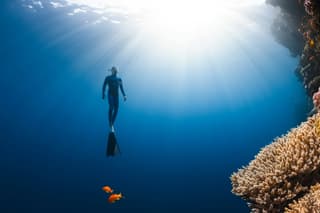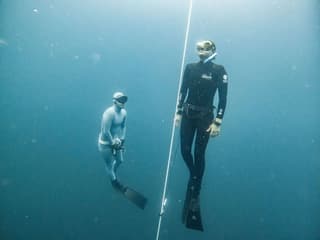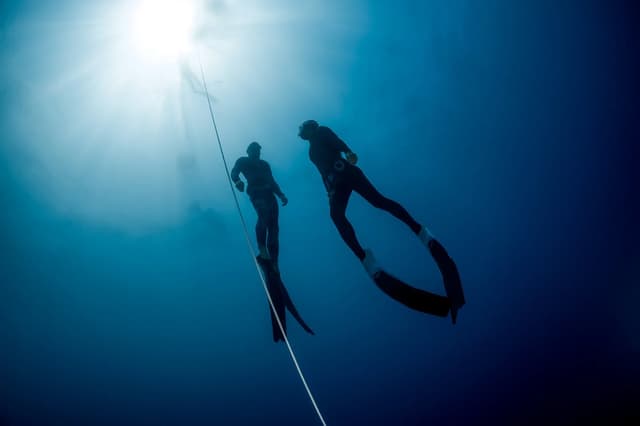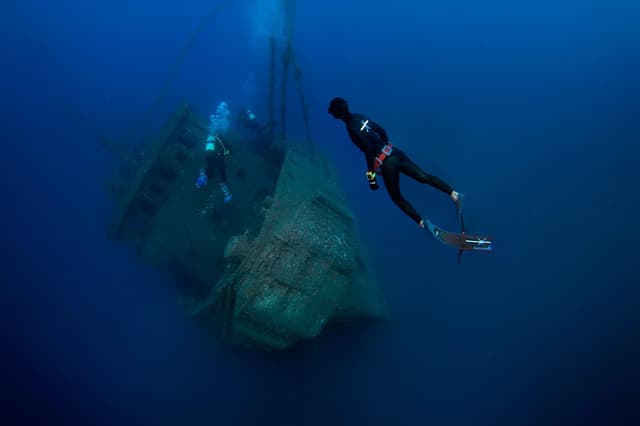
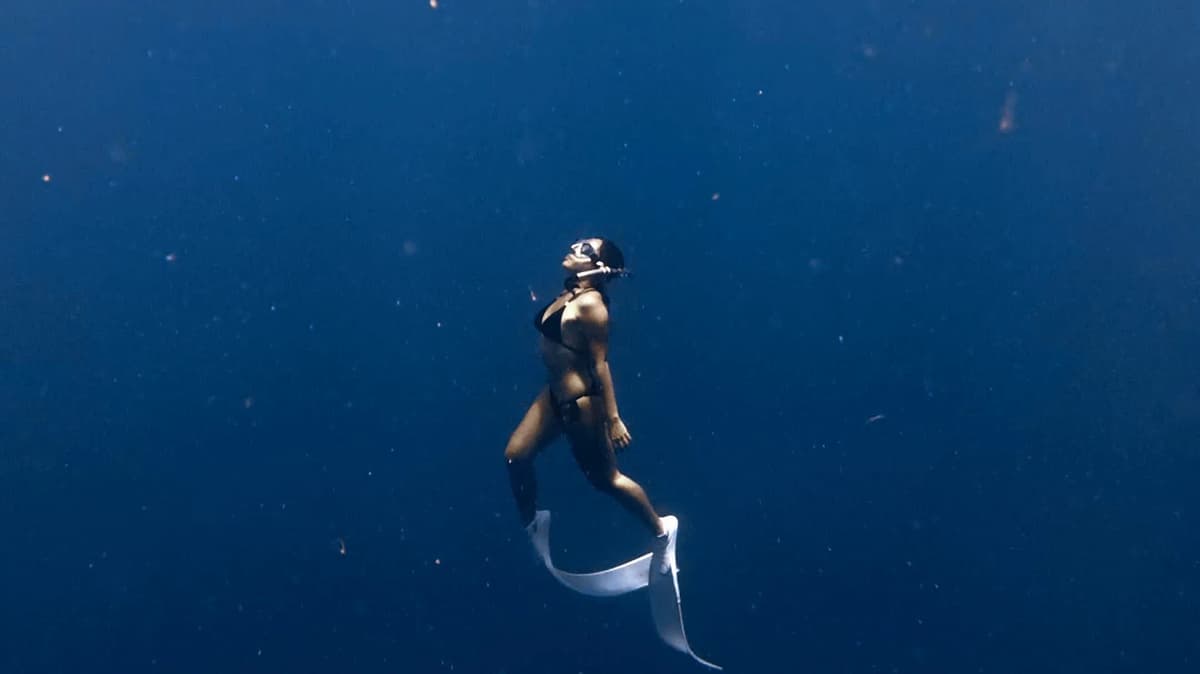
Freediving and scuba overlap underwater, but the experience is very different. Freediving is often about looking inward: calm, breath control, self-awareness, and working with your own limits. Scuba is mainly about looking outward: exploring coral reefs, marine life, and spending time in environments you could not otherwise reach. Different goals, different risks, different training. For many people the choice is not ideological. It depends on what kind of underwater experience you want and what kind of training feels appealing.
Freediving and scuba overlap underwater, but the experience is very different. Freediving is often about looking inward: calm, breath control, self-awareness, and working with your own limits. Scuba is mainly about looking outward: exploring coral reefs, marine life, and spending time in environments you could not otherwise reach.
Different goals, different risks, different training. For many people the choice is not ideological. It depends on what kind of underwater experience you want and what kind of training feels appealing.
Inward focus vs outward exploration
Freediving draws people who enjoy the mental challenge: relaxation under pressure, the feedback loop of technique and breath control, and the quiet of being underwater on a single breath. The sport rewards patience, self-awareness, and the ability to stay calm when things get uncomfortable.
Scuba draws people who want to explore. Longer bottom times, equipment that extends your reach, and the ability to hover over a reef watching fish for 45 minutes. The focus is outward: what can you see, where can you go, what marine life can you encounter.
Some divers want both. Freediving can sharpen your water comfort for scuba, and scuba can show you places that a single breath will not reach.
Training and risk profiles differ
Freediving training leans hard on breath control, relaxation, equalization, and efficient movement. The main risks are blackout from hypoxia, equalization injuries, and lung squeeze from descending faster than your body adapts. Safety depends heavily on a trained buddy.
Scuba training focuses more on equipment management, buoyancy, and underwater procedures. The main risks are decompression sickness, equipment failure, and air supply management. Safety depends on gear checks and dive planning.
Cost and logistics look different too
Freediving usually requires less equipment to own and less daily logistics once you are set up. Scuba often carries higher gear and boat costs, but it also opens a different kind of dive profile.
You do not have to choose only one forever
A lot of divers do both. Freediving can improve water confidence and body awareness, while scuba can expand your access to longer underwater exploration.
If you are deciding where to start, compare schools that explain their teaching style clearly and look for destinations where you can train without complicated transfers or marginal conditions.
Common questions
Is freediving harder than scuba?
They are different rather than directly harder or easier. Freediving leans more on breath control and relaxation, while scuba leans more on equipment and buoyancy management.
Can you do both freediving and scuba?
Yes. Many divers enjoy both and use each one for different types of trips and training goals.
Which is cheaper to start with?
Freediving often has lower equipment overhead, though course prices vary by destination and school.